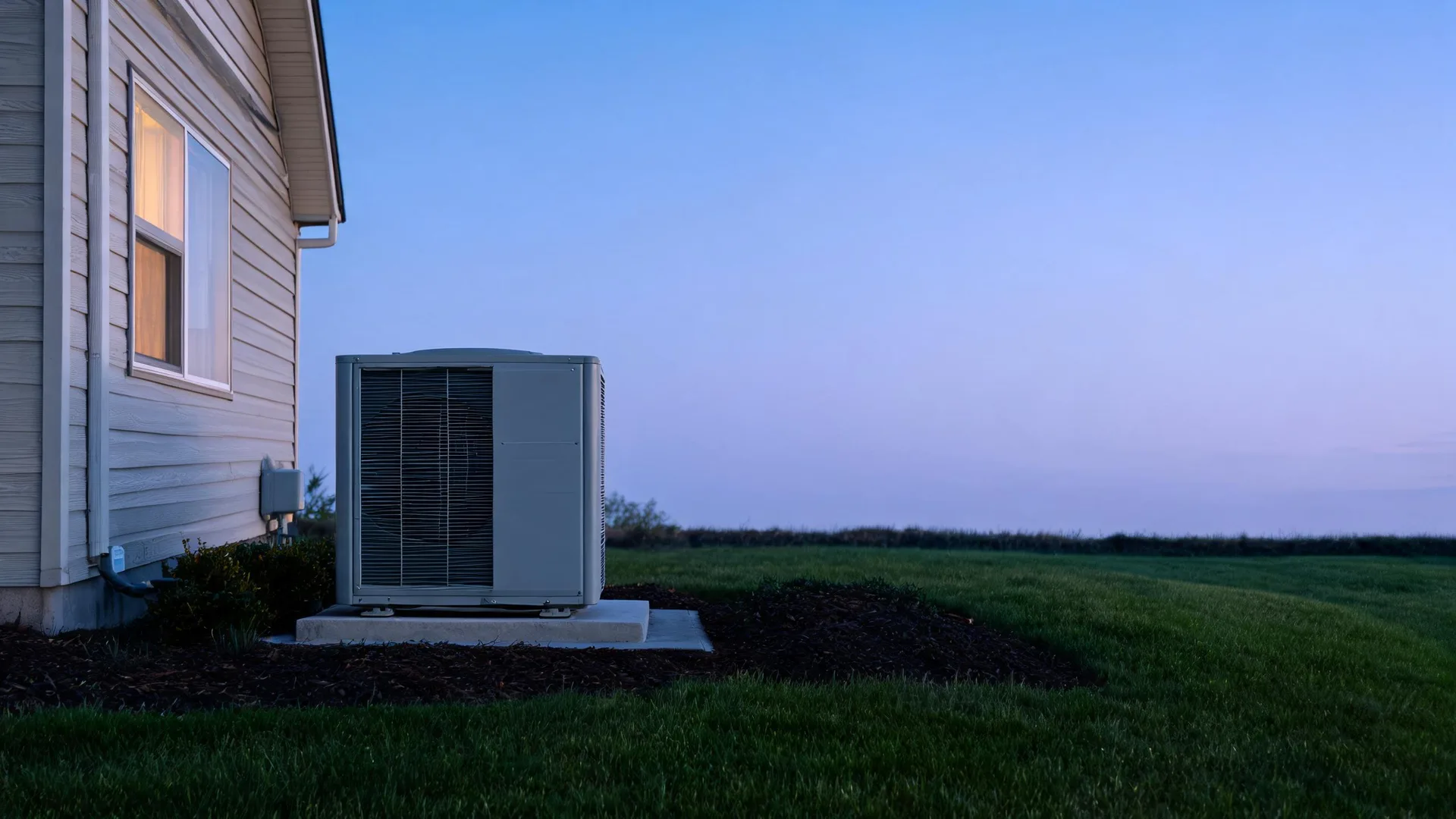
Electricity here runs 19.34 cents per kilowatthour
New Jersey power costs more than it does in most states. Every kilowatt your new AC pulls gets charged at that rate, all summer long.
Takes about a minute. No obligation.
New Jersey power costs more than it does in most states. Every kilowatt your new AC pulls gets charged at that rate, all summer long.
A higher-rated unit uses less power to deliver the same cooling. At New Jersey's rates, that difference on the bill is bigger than it would be somewhere electricity is cheap.

NOAA nClimDiv, 1991–2020 normals
The size written on the quote matters more than the brand on the unit.
A unit too big for the space cools it fast but never runs long enough to pull the damp out of the air.




Taking out the old condenser and coil is part of a full install, not an extra step tacked on. The old refrigerant gets recovered first, never vented, since the lines are still under pressure even on a dead unit. After that the condenser gets disconnected from the electrical whip, the old coil comes out of the plenum, and the line set either gets reused or replaced depending on its condition. If the new system uses a different refrigerant than the old one, the line set usually has to go, because residue left behind can contaminate the new charge. None of this determines how well the new unit cools. It just has to be done right before the new equipment goes in.
Any split-system AC installed here now has to hit 13.4 SEER2 at minimum, the federal floor for units under 45,000 Btu/h. That rating already accounts for Monmouth County's mixed, humid climate, zone 4A. It sets the baseline. What you pick above it is what decides the bill.
Find a contractorSizing comes from a load calculation, not a tape measure on the old unit. A contractor works through the square footage, the windows, the insulation, the ceiling height, and how much shade the place gets. That work ends in a number in Btu/h, and that number is what the new system gets built around. Go bigger than that number and the unit short cycles. It blasts cold air, hits the thermostat setting, and shuts off before it has run long enough to pull moisture out of the air. The room ends up cold and clammy at the same time. Go smaller and it runs nonstop on the hottest days and still falls behind. Both mistakes wear the equipment harder too, since short cycling and constant running both add stress a correctly sized unit never sees. The right size is the one that runs in long, steady stretches and still keeps up on the worst day of the year.
SEER2 comes from testing a unit across a range of outdoor temperatures, not at one extreme. It tells you how the system performs on mild days and mild nights, not just the afternoon the thermostat gets pushed hardest. A unit can carry a strong rating and still struggle on the worst day of the year if it's sized wrong for the space.
The rating has nothing to do with how cold the air gets or how fast the space cools down. A higher-rated unit reaches the same setpoint using less power to get there. It doesn't cool stronger or faster. Comparing units on anything other than that rating and the correct size is comparing the wrong things.
Estimates for a typical Monmouth County home, from EIA household energy data, New Jersey fuel prices and NOAA climate normals. Your home will differ.
Install day starts with the house empty of cooling for a few hours, so the old system usually comes out before the new one goes in. Once the new condenser is set on its pad and the coil is in the plenum, the lines get connected and the system is pressure tested before any refrigerant goes in. A vacuum pump pulls moisture and air out of the line set next, because any left behind mixes with the refrigerant and causes problems down the road. Only after that test holds does the system get charged, and the charge gets weighed in or checked against the manufacturer's numbers rather than guessed at. The last part is running the system through a full cycle, checking the airflow at the vents and the temperature split across the coil, before anyone calls it done.