







Overhead view of a gray outdoor AC condenser unit on a concrete pad beside a mulched garden bed and a house with vinyl siding.

AC Installation in Hackensack, NJ

Tell us about the job

Takes about a minute. No obligation.

New system or replacementCentral ACBergen County, NJ
Step 1 of 2

What ZIP code is the job in?

New Jersey homes paid 19.34 cents per kilowatthour for electricity in 2024, well above what most of the country pays. At that rate, a system that runs efficiently matters more here than it would somewhere cheaper. The difference between a unit sized right and one that isn't shows up on every bill, not just the big ones. A contractor installing your new AC should be weighing SEER2 ratings against your home's actual cooling load, not just swapping in whatever matches the old unit. Get that match right and you spend less on every bill for as long as the system runs.

3 months
June through August, your air conditioner is on duty
84°F
the average summer afternoon it cools against
42 hail events
in ten years, and hail bends the fins on outdoor coils
13.4 SEER2
the federal minimum any new unit must meet
Isometric cutaway illustration of a single-story house showing interior rooms, ceiling ductwork connected to an indoor air handler, and an outdoor condenser unit beside the exterior wall.
Your air conditioner works hardest from June through August.

NOAA nClimDiv, 1991–2020 normals

Bergen County saw 155 damaging wind events and 34 winter storms in the last ten years.

A standard, correctly sized system handles weather like that fine. Nothing here calls for oversizing or a premium unit.

Three months of summer, nothing here that calls for more than a standard system

Cooling runs June through August
Summer afternoons average 84°F
155 damaging wind events from 2015 to 2024
Cooling starts in June. Install it in May.Homes in Bergen County run cooling June through August, about three months a year.

Half the houses in Hackensack were built in 1960 or earlier. A house that age wasn't built with central air in mind, and whatever ductwork is in there now was likely added after the fact, maybe more than once. That history matters when you're sizing a new system. The right tonnage depends on the house as it actually is, the windows, the insulation, the duct run, not on what size unit happened to be in there before. A contractor should be measuring your home, not matching a number off the old equipment.

The minimum here is 13.4 SEER2

Bergen County falls under zone 5A, and any split-system AC under 45,000 Btu/h installed here has to meet at least 13.4 SEER2. That floor is set at the federal level, not by preference. A new system also qualifies for a federal tax credit, worth checking into before you settle on a unit.

Find a contractor
A man in a cap, dark work shirt and dusty tan pants walks up concrete steps toward a blue front door, carrying a worn canvas tool bag in his right hand, with a potted shrub beside the entry.
A gray cylindrical air conditioning condenser unit mounted on a concrete pad next to a light-colored vinyl-sided house exterior.

Decades in a house this old

A system installed this year runs for years inside a house built in 1960 or earlier. Ask whoever measures your home to show their math, the square footage, the window count, the insulation, not just hand you a tonnage number. That load calculation is what tells you the unit will actually fit the house, year after year.

The rating is a season, not a single moment

SEER2 measures how much cooling a unit delivers over a whole season for the electricity it uses, not what it draws at any one instant. A higher number means less electricity for the same amount of cooling, season after season. It says nothing about how fast the unit cools or how big a house it can handle.

The number only pays off if the unit fits the house

A high SEER2 unit sized wrong for the house won't deliver the efficiency printed on the label. A unit too big cycles on and off before it finishes a proper cooling cycle, which wastes the efficiency it was rated for. A unit too small runs constantly trying to keep up. The rating assumes the system matches the load it's cooling.

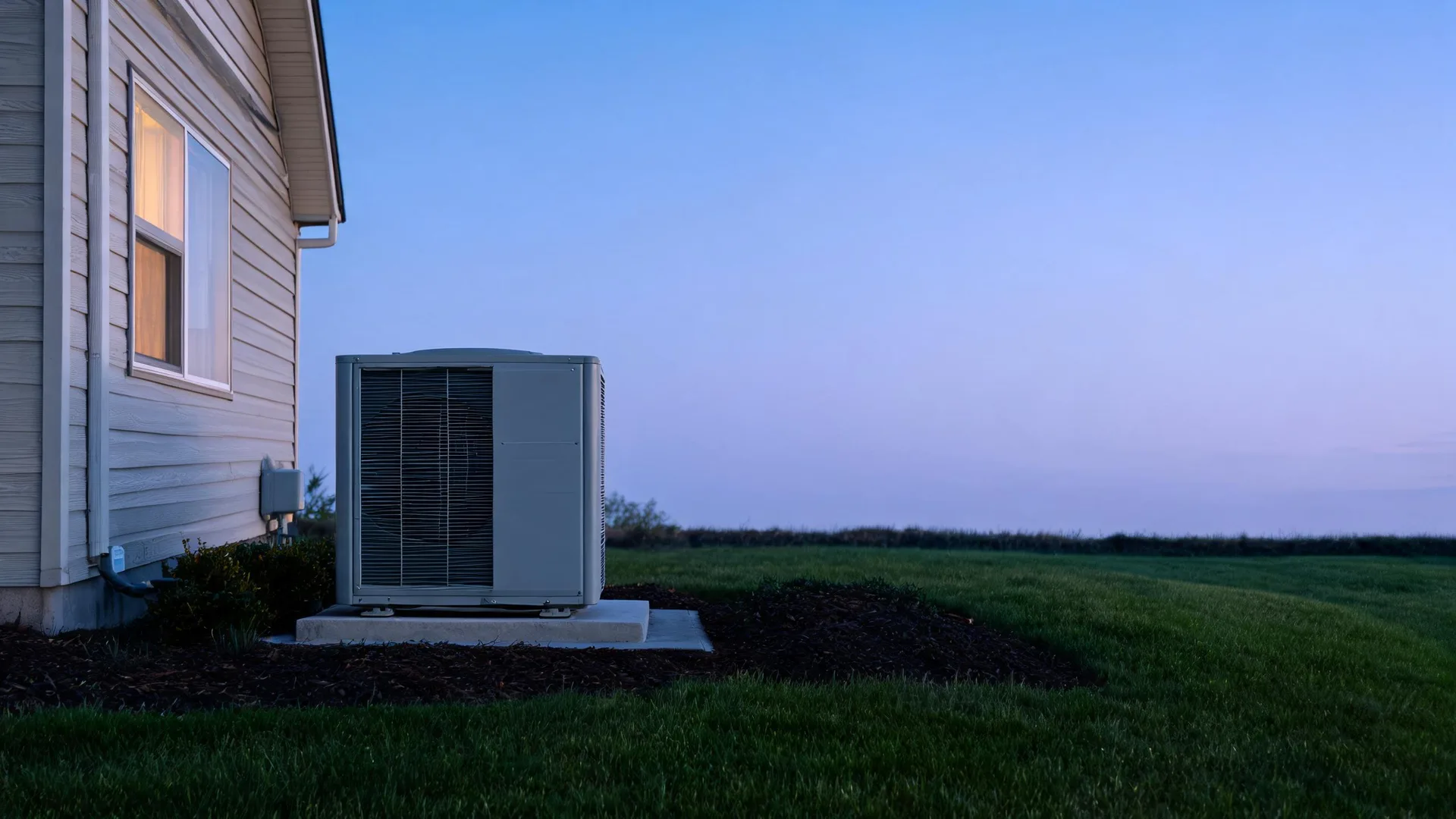
An outdoor air conditioning condenser unit positioned beside a blue-sided house at sunset.

A higher-efficiency unit would save about $30 a year to run in Bergen County compared with a new unit at the federal minimum.

  • A higher-efficiency unit$270 a year
  • A new unit at the federal minimum, 13.4 SEER2$300 a year

Estimates for a typical Bergen County home, from EIA household energy data, New Jersey fuel prices and NOAA climate normals. Your home will differ.

Installation day starts with the old unit coming out. The line set gets disconnected, the refrigerant recovered, the old pad or mounting cleared off before anything new goes in. Duct work gets checked next. Joints get sealed, and the supply and return get looked at to make sure they can actually move the air the new unit is rated for. A system sized right on paper still falls short if the ducts feeding it are leaking or too narrow. Once the indoor and outdoor units are set, the line set gets run and brazed, then the system gets evacuated to pull out moisture and air before it's charged with refrigerant to the exact weight the manufacturer specifies. The last part is the one that gets skipped when someone's in a hurry. The system should run for a while with someone checking the refrigerant charge against the manufacturer's numbers, measuring airflow at the vents, and confirming the thermostat is actually talking to the equipment. None of that shows up on the invoice, but it's the difference between a system that hits its rated efficiency and one that just turns on.