







Two white colonial houses with lit windows and black shutters photographed at dusk along a tree-lined residential street.

AC Installation in Glassboro, NJ

Tell us about the job

Takes about a minute. No obligation.

New system or replacementCentral ACGloucester County, NJ
Step 1 of 2

What ZIP code is the job in?

New Jersey electricity ran 19.34 cents per kilowatthour in 2024, well above what most of the country pays. An air conditioner with a low efficiency rating burns more of that expensive power every time it cycles on. Through a long, hot summer that adds up, because the unit isn't running for a few minutes here and there, it's running for hours at a stretch on the hot days. A higher-efficiency system draws less power to produce the same cooling, so the gap between an old unit and a new one shows up directly on the bill. In a state with cheap power that gap barely matters. Here it does.

4 months
June through September, your air conditioner is on duty
85°F
the average summer afternoon it cools against
9 hail events
in ten years, and hail bends the fins on outdoor coils
13.4 SEER2
the federal minimum any new unit must meet
Isometric line illustration of a cutaway single-story house showing interior rooms, ducted air handler, ceiling ductwork, and an outdoor condenser unit connected by refrigerant lines.
Your air conditioner works hardest from June through August.

NOAA nClimDiv, 1991–2020 normals

The SEER2 number on the label says how much cooling the unit gets out of the power it draws.

A system that cools your house just as well can still cost less to run all summer if that number is higher.

Most of Glassboro heats with gas, and that's worth knowing before you replace central air

77.9% of homes heat with gas
Cooling runs June through September
Summer afternoons average 85°F
Get it done before JuneCooling runs June through September here. May is the month to have it ready.

Four months of real cooling, June through September, with afternoon highs averaging 85. That's enough heat to run a system hard on the worst days, but nothing about it is extreme. A standard-sized, standard-efficiency unit handles this county fine. Zone 4A means the air carries real humidity along with the heat, and a properly sized central air system handles both without any special equipment added on. Nothing here calls for oversizing the unit or paying for more than the SEER2 math already supports.

Pick the SEER2 number that pays you back

A new system's SEER2 rating is on the label. Checking it against what you're replacing is the easiest way to see what this install will mean for your bill once summer gets going.

Find a contractor
A man seen from behind carrying a worn canvas tool bag walks up concrete steps toward a dark teal front door of a house with gray horizontal siding, beside a shrub in a blue ceramic pot.
An outdoor air conditioning condenser unit mounted on a concrete pad surrounded by gravel, photographed against a partly cloudy blue sky.

Sized wrong, it wears out fighting your house

An oversized unit cools the room fast and shuts off before it pulls the moisture out of the air. That's why a too-big system leaves a house feeling clammy even though the thermostat says it's satisfied. An undersized one never gets that fast cycle at all. It runs long and still falls behind on the hottest afternoons, and every one of those long runs adds wear to the compressor. Sizing is worked out with a load calculation, which weighs the square footage against the windows, the insulation and the layout room by room, not a rule of thumb based on the old unit. Installed right, the system cycles on, satisfies the thermostat, and shuts off, long enough each time to wring the humidity out of the air. That on-off rhythm, repeated for years without ever running too long or too short, is what keeps a compressor alive for its full stretch.

The old unit gets disconnected, not left in place

A central air swap means the old condenser outside gets unhooked from its power and the refrigerant lines, and the old coil comes out of the plenum above or beside the furnace. Whatever refrigerant is left in the system gets recovered into a tank rather than vented, that's a legal requirement, not a courtesy. None of it gets reused.

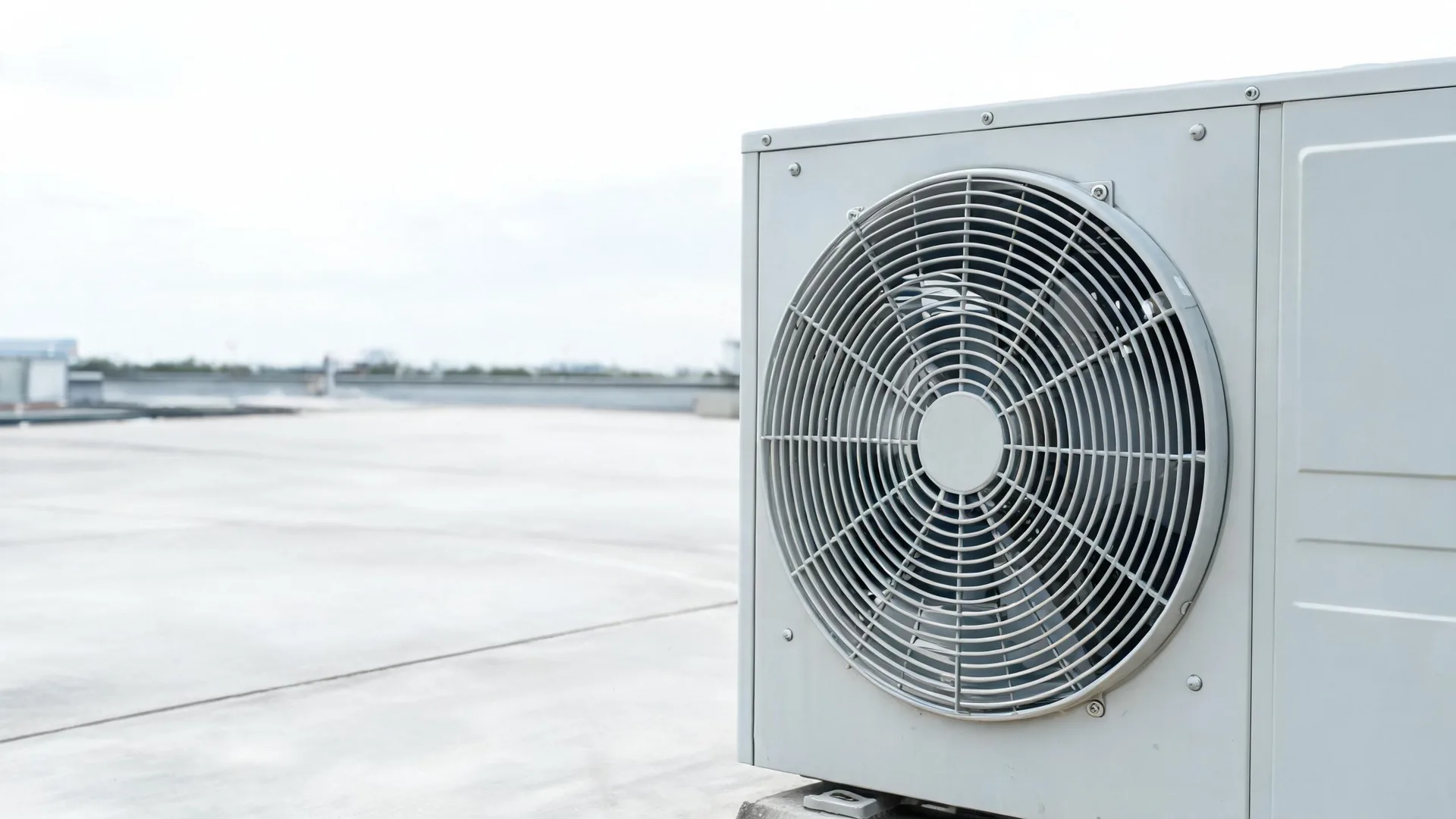
The pad and the lines usually stay

The concrete pad the condenser sat on typically stays put for the new unit, and the copper line set running between indoor coil and outdoor condenser often gets reused if it's sized right for the new system. What doesn't get reused goes out as scrap metal, which is where most of an old system's value actually sits.

Aerial view of a gray central air conditioning condenser unit on a concrete pad next to a house with vinyl siding.

A higher-efficiency unit would save about $50 a year to run in Gloucester County compared with a new unit at the federal minimum.

  • A higher-efficiency unit$330 a year
  • A new unit at the federal minimum, 13.4 SEER2$380 a year

Estimates for a typical Gloucester County home, from EIA household energy data, New Jersey fuel prices and NOAA climate normals. Your home will differ.

Installation day starts with the old system still running or already dead, and ends with the new one cooling the house. The crew sets the condenser on the pad, sets or replaces the indoor coil, and runs the line set between them. Every joint in that line gets brazed. Then the whole system gets pressure tested before any refrigerant goes in, because a leak found after the charge is in means recovering it all over again. Once the lines hold pressure, a vacuum pump pulls moisture and air out of the system. Either one left behind will ruin the compressor over time, and that's true whether it's old air trapped in a new coil or moisture that crept in during the work. Only then does the refrigerant go in, weighed to the amount the manufacturer specs for that line length. The last part of the day is the startup check. Airflow across the coil, the temperature drop between the return and the supply, and whether the system cycles on and off the way it's supposed to before anyone calls it finished.