







Aerial view of a square outdoor air conditioning condenser unit on a concrete pad beside a house wall with a sliding glass door.

AC Installation in Elizabeth, NJ

Tell us about the job

Takes about a minute. No obligation.

New system or replacementCentral ACUnion County, NJ
Step 1 of 2

What ZIP code is the job in?

New Jersey households paid 19.34 cents per kilowatthour in 2024, well above what homes pay across most of the country. An air conditioner that runs through the summer here will show that rate on every bill it touches. The difference between a unit that cools efficiently and one that just cools shows up month after month, not just on the install invoice. Worth asking what SEER2 rating a contractor is quoting, and sizing the system to the home rather than rounding up.

4 months
June through September, your air conditioner is on duty
84°F
the average summer afternoon it cools against
3 hail events
in ten years, and hail bends the fins on outdoor coils
13.4 SEER2
the federal minimum any new unit must meet
Isometric line illustration of a cutaway house showing interior rooms with furniture, ductwork leading to an indoor air handler, and an outdoor condenser unit connected by a line set.
Your air conditioner works hardest from June through August.

NOAA nClimDiv, 1991–2020 normals

Homes in Elizabeth run cooling from June through September.

May is the month to get a new system in, before the first hot stretch asks something of it.

Half the homes in Elizabeth were built in 1956 or earlier. A system sized for new construction may not match a house that old.

Half the homes here were built by 1956
Cooling runs June through September
Summer afternoons average 84°F
Elizabeth Runs on GasGas heats 81.8% of homes in Union County. Central air usually comes paired with it.

Union County sits in climate zone 4A, a mixed zone that asks real work of both heating and cooling. Summers here are humid enough that an undersized or inefficient unit struggles to keep up. Any new split-system air conditioner under 45,000 Btu/h has to meet a federal minimum of 13.4 SEER2. That floor applies whether the home is getting a straight replacement or a first-time install. A contractor quoting anything lower isn't quoting a legal system here.

The right size, done right, is enough here

Four months of real cooling, afternoon highs near 84, and a mixed climate that works both systems hard. None of that calls for an oversized unit or a premium tier, just one sized correctly for this house. Get that right and the system handles what this county asks of it, summer after summer.

Find a contractor
A man in a cap, navy T-shirt and tan work pants, seen from behind, climbs porch steps toward a dark teal front door while carrying a canvas tool bag.
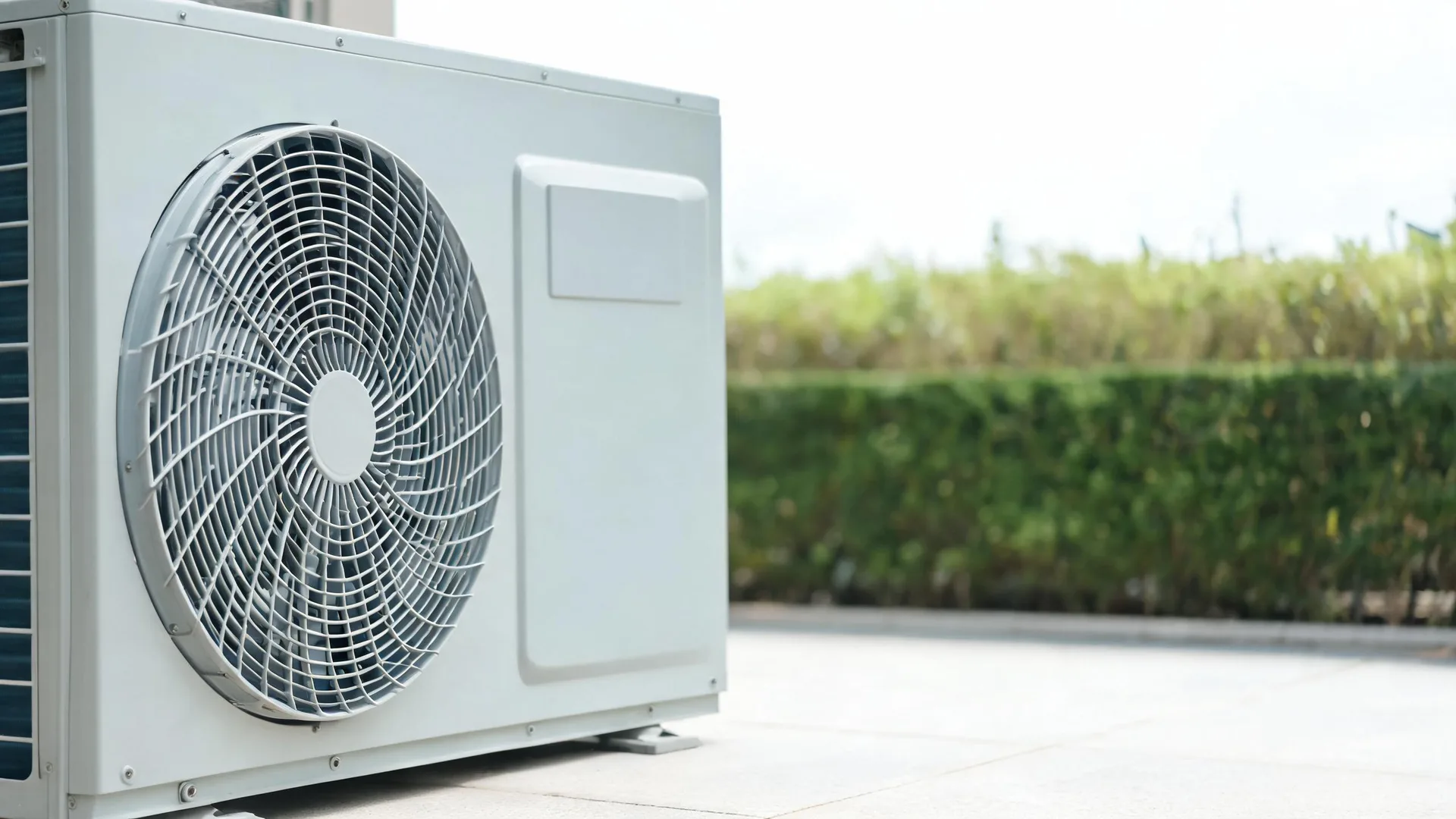
A gray metal air conditioning condenser unit mounted on a concrete pad in a flat grassy field under a partly cloudy sky.

Size it to the house you have

Ask for a room by room load calculation on your actual house, not a number carried over from a newer build down the street. If ductwork is already in place, have it checked before the new unit goes in. Ducts sized for an older, smaller system don't always move enough air for the one replacing it.

The load calculation sets the price

A contractor measures the house room by room before naming equipment. That number decides the tonnage, and tonnage drives most of what the equipment costs. Skip the calculation and you're quoting blind, either paying for capacity the house doesn't need or buying a unit that will run constantly and still not keep up.

What's already there changes the job

A straight swap, same spot, same line set, same ductwork, is the cheapest version of this job. Once the ducts need resizing, the electrical panel needs work, or there's no good place to set the condenser, the install picks up labor and material the equipment price never included. That's the gap between what a unit costs and what putting it in costs.

Overhead view of an outdoor AC condenser unit on a concrete pad next to a house with a dark shingle roof.

A higher-efficiency unit would save about $40 a year to run in Union County compared with a new unit at the federal minimum.

  • A higher-efficiency unit$290 a year
  • A new unit at the federal minimum, 13.4 SEER2$330 a year

Estimates for a typical Union County home, from EIA household energy data, New Jersey fuel prices and NOAA climate normals. Your home will differ.

Install day starts with the old equipment coming out. The condenser outside, the coil and furnace or air handler inside, and the line set running between them. Most installs call for new line set rather than reusing the old one, since residue and the wrong diameter can carry over into the new system. The coil gets matched to the new condenser, set into the plenum, and sealed so air isn't leaking out before it reaches the ducts. Once the new line set is run and connected, the system gets evacuated to pull out moisture and air. Then it's charged with refrigerant to the amount the manufacturer specifies, not just until it feels cold. The last part is startup. Airflow across the coil gets checked, the temperature split between the air going in and out gets checked, and the condenser has to be drawing the current it should. A system that skips that last check can look finished and still run wrong for years.