




A white picket fence runs along a mown grass lawn in front of a row of gray clapboard houses with gabled shingle roofs, with large leafy tree branches overhead.

AC Installation in Burlington, NJ

Tell us about the job

Takes about a minute. No obligation.

New system or replacementCentral ACBurlington County, NJ
Step 1 of 2

What ZIP code is the job in?

New Jersey electricity ran 19.34 cents per kilowatthour in 2024, well above what most states pay. Every degree your new AC has to fight costs you more here than it would somewhere with cheaper power. That makes the efficiency rating on the unit you choose worth real attention, not just the price tag on installation day. A system sized right for your house and installed correctly uses less power to do the same job. That difference shows up on every bill the unit runs through, not just the first one.

4 months
June through September, your air conditioner is on duty
85°F
the average summer afternoon it cools against
57 hail events
in ten years, and hail bends the fins on outdoor coils
13.4 SEER2
the federal minimum any new unit must meet
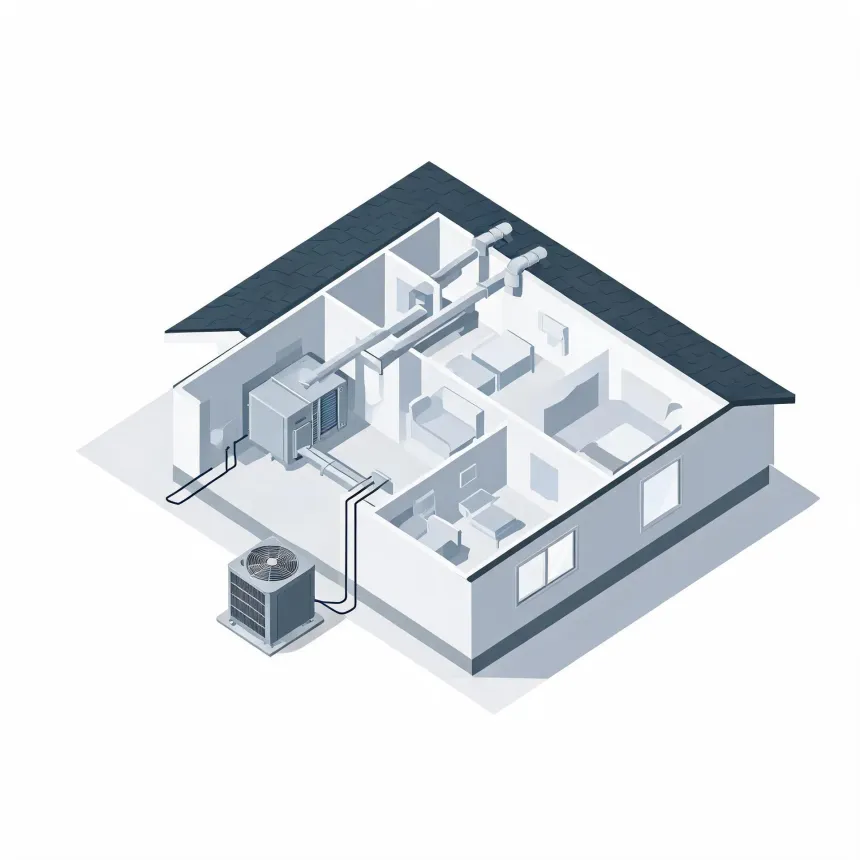
Isometric cutaway illustration of a single-story house showing interior rooms, ceiling ductwork, an indoor air handler, and an outdoor condenser unit connected by lines, in gray and white tones on a white background.
Your air conditioner works hardest from June through August.

NOAA nClimDiv, 1991–2020 normals

The SEER2 number on the label is a ceiling, not a promise.

Your actual bill depends on duct leaks, sizing, and whether it gets installed the way the manufacturer specs it.

Burlington County sees its share of storms, but none of that changes what size or efficiency rating your AC should be

514 severe weather events from 2015 to 2024
11% of homes statewide lost power a day or more in 2024
405 damaging wind events from 2015 to 2024

Cooling here runs June through September, so May is the month to have a new system already in place. Installing before the season starts means it goes in on your schedule, not in the middle of a heat wave. A contractor can take the time to size the unit for your house and set the charge correctly, instead of rushing a swap while the house is already warm. Wait and you are choosing from whatever is in stock, installed by whoever has an opening that week. The unit going in now is the one running for the next four months, so getting it right matters more than getting it fast.

Your new AC has to clear 13.4 SEER2 here, and a tax credit may help cover the difference

Burlington County falls in climate zone 4A, which asks real work of both heating and cooling. Any split-system AC under 45,000 Btu/h installed here now has to meet 13.4 SEER2 at minimum under federal rules. A federal tax credit is available for qualifying high-efficiency equipment, worth checking before you settle on a unit.

Find a contractor
A man in a dark long-sleeve shirt and worn tan work pants walks up porch steps toward a dark teal front door, carrying a weathered canvas tool bag in his right hand, with a potted shrub in a blue planter beside the door.
An outdoor air conditioning condenser unit mounted on a concrete pad surrounded by gravel, photographed against a partly cloudy blue sky.

Built across decades, sized the same way

Half the homes in Burlington County were built in 1977 or earlier, half in 1977 or later. That split does not point to any one duct layout or any one sizing problem, so it does not point to a bigger unit or a pricier one. Whatever system fits your house fits it because of the square footage and the layout, not the year it was built. A standard efficiency rating does the job here, running day into night, season after season.

Sizing the unit is the real work

A contractor has to work out how much heat your house gains through its walls, windows and roof, then match a unit to that figure. Too big and the system cools the air fast but never runs long enough to pull the moisture out, so the house feels clammy. Too small and it runs constantly without ever catching up. Getting the size right, not the badge on the condenser, is most of what the installed price pays for.

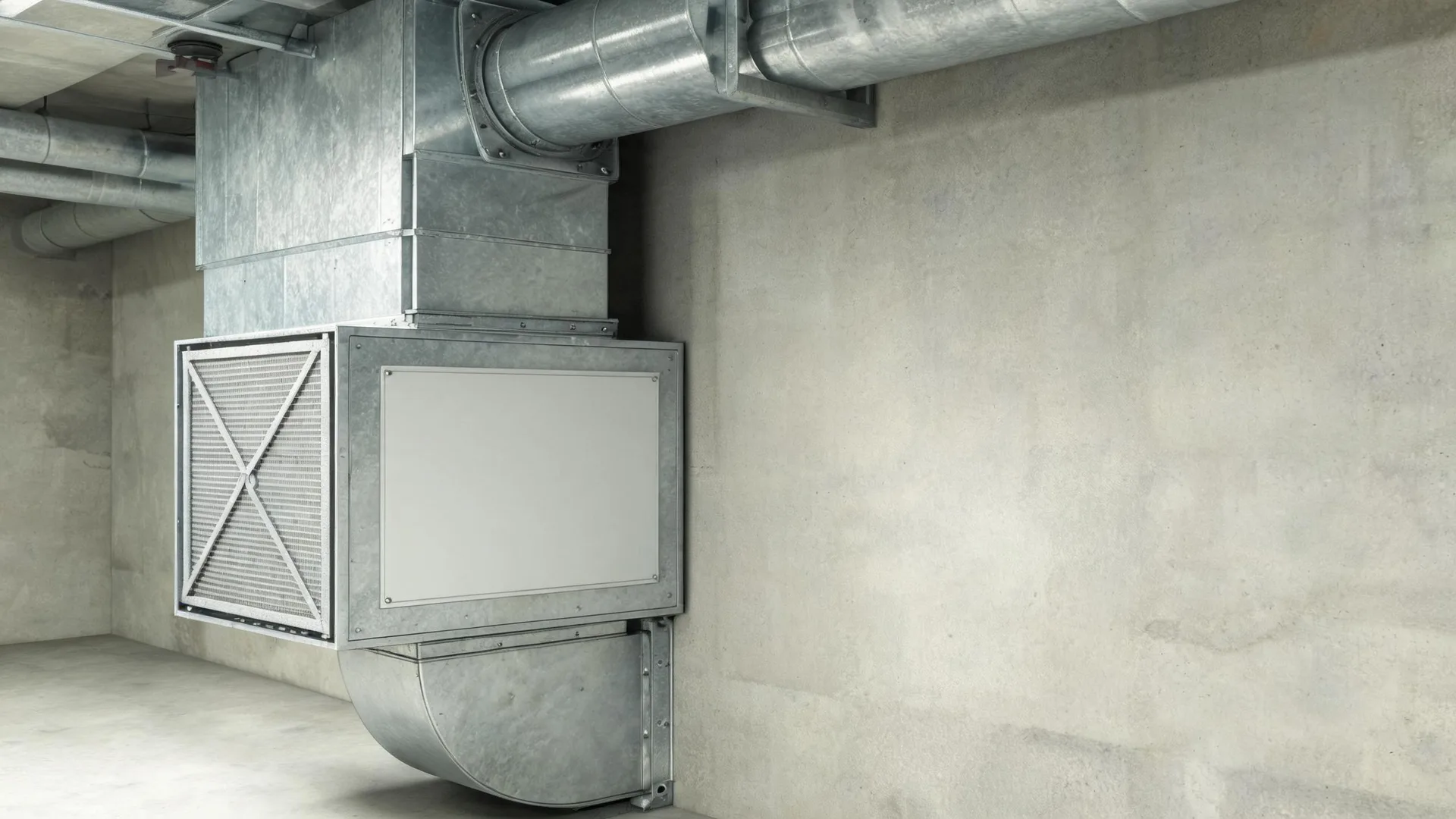
What's already there changes the job

If the ductwork, the electrical disconnect and the line set are already in place and in good shape, installation is mostly a swap. If the old ducts leak, or the panel cannot handle the new unit's draw, that work happens before the AC goes in, not after. None of it shows up until someone is in the house looking at the actual equipment.

Aerial view of a gray outdoor air conditioning condenser unit mounted on a concrete pad next to a house with vinyl siding.

A higher-efficiency unit would save about $50 a year to run in Burlington County compared with a new unit at the federal minimum.

  • A higher-efficiency unit$300 a year
  • A new unit at the federal minimum, 13.4 SEER2$350 a year

Estimates for a typical Burlington County home, from EIA household energy data, New Jersey fuel prices and NOAA climate normals. Your home will differ.

Installation day starts with the old equipment coming out, condenser, coil and whatever line set isn't being reused. The contractor confirms the new unit's position and clearances before anything gets set, since airflow around the condenser affects how well it sheds heat. Line set gets connected, the system gets evacuated to pull moisture and air out of the lines, then it's charged with refrigerant to the weight the manufacturer specs for that unit and that length of line. Electrical hookup and a disconnect box come next if they aren't already in place. Once it's running, the tech checks the temperature drop across the coil and the pressures on both sides of the system to confirm it's charged correctly, not just that it's blowing cold. A unit that starts up fine but never gets checked against those numbers can run for years costing more than it should.