Working the way it should
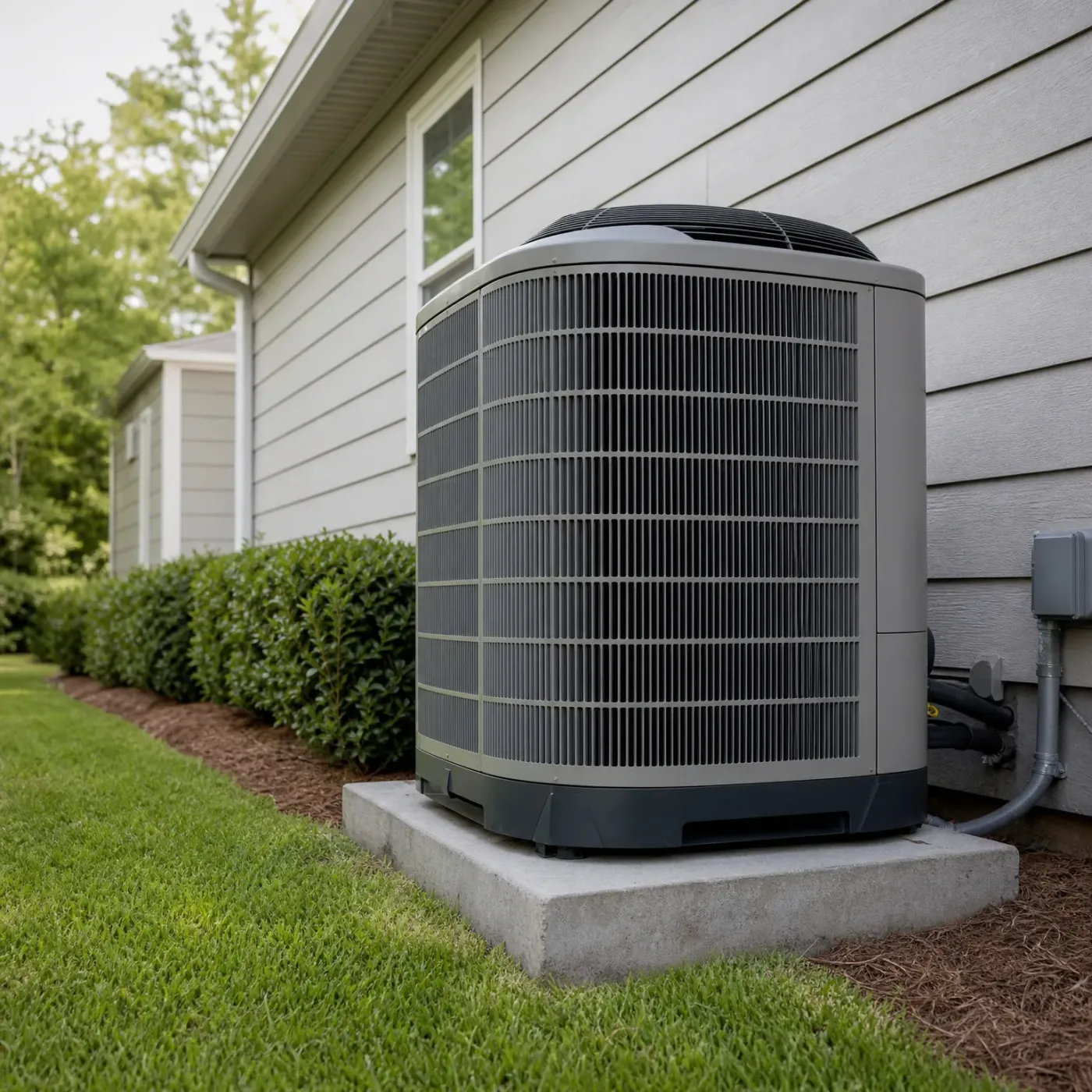
The coil is clean and the fins are straight, so air moves through it the way it was designed to. A unit kept clear of leaves and clipped grass can run all day in January cold and still move the heat it needs to.

A heat pump that runs nonstop in a New Jersey winter is usually doing exactly what it's built to do. Below about freezing, a heat pump has to pull more heat out of thinner, colder air, so it runs longer and harder than it did in November. On the coldest days it may run almost all day without shutting off. That alone isn't a failure. It becomes a problem when the house still isn't warm, when you see frost built up on the outdoor unit that isn't melting off during the defrost cycle, or when the system never cycles off even on a milder day. Those point to something actually wrong: low refrigerant, a stuck reversing valve, a failing defrost control, or a unit that's undersized for the house. Catching that difference early, long-running but keeping you warm versus long-running and still cold, is what keeps a small repair from turning into a system that can't get through January.




Your heat pump doesn't make heat the way a furnace does. It pulls heat out of the outside air and moves it inside. That works fine down to a point, but the colder the air gets, the less heat there is in it to grab. So the compressor has to run longer to pull out the same amount it got in ten minutes back in November. Once outdoor temperatures drop into the mid-30s or below, most systems bring on backup electric resistance heat to make up the difference, and that's the part that shows up on your bill. On top of that, cold, damp air builds frost on the outdoor coil, and the system has to stop and run a defrost cycle to clear it. For a few minutes it reverses itself and pushes cool air inside, which can feel like a malfunction when you walk past a vent. None of this means the unit is struggling. A heat pump that runs nearly all day in January and still holds the house at temperature is doing its job. The thing worth paying attention to is whether it's keeping up, not how long it runs to get there.




The pro who reaches out is licensed in New Jersey.
After this form, you can stop searching for a heat pump pro.
No fee to send it, and nothing to sign.
Walk past the outdoor unit and it's been running for hours, maybe since this morning. The house feels fine, so that's one thing working as it should. But check the vents. If the air coming out feels barely warm, or the house needs a sweater even with the thermostat set higher, the unit isn't keeping up. Listen for it running flat out with no break, hour after hour, with a thick layer of ice on the coil that never seems to clear. That combination, long runtime and a cold house, is different from long runtime and a warm one. Left alone through a stretch of 20s or teens, a system that's struggling can freeze up hard, trip on high demand, or lean so hard on backup heat that your electric bill tells you something's off before you even look outside.

The coil is clean and the fins are straight, so air moves through it the way it was designed to. A unit kept clear of leaves and clipped grass can run all day in January cold and still move the heat it needs to.

Dirt packed into the fins blocks the airflow the coil depends on, so it pulls less heat out of the same cold air. That makes it run longer to do less, and in a New Jersey winter it may never catch up at all.



Mulch down, shrubs trimmed back, the pad clear. Air moves through the coil the way it's supposed to, so even on a hard January day the unit can keep up and shut off once the house is warm. Nothing blocking the fan or the lines running to the wall.

The same unit, but something's off. A dirty coil, a failing part, or low refrigerant means it can't move enough heat no matter how long it runs. The house stays cold, the unit never clicks off, and that's a repair, not a cold snap.
At 22.48 cents a kilowatt-hour, every extra hour your heat pump runs on a cold day shows up on the bill fast. A unit running long because it's January is one thing. One running long because the coil's dirty or the charge is low is paying for heat it isn't delivering.
EIA-861 2025 statewide residential average
Long hours on a cold day don't mean anything is wrong. A heat pump working through a stretch in the 20s or 30s is doing what it was built to do, and it should still bring the house up to temperature and shut off. What matters is whether it gets there. If the air at the vents is barely warm, if the unit never cycles off, or if the house stays cold no matter how long it runs, that's not the weather. That's a coil that needs cleaning, a charge that's low, or something else a technician needs to look at directly.
Finding the right person for that doesn't have to be the hard part. Heat pumps in New Jersey get worked on all winter, and a contractor who handles them regularly has likely already run into whatever is slowing this one down, whether it's a coil caked with debris or a refrigerant leak that's been quietly cutting capacity for weeks. That kind of repeat exposure is what makes a diagnosis fast instead of a guessing game.
Send the request once and it goes to one licensed contractor local to you, not a pile of companies all calling about the same job. From there, the search is off your plate. Someone qualified gets the details and takes it from here, which means you stop tracking down names and start waiting on an answer about your unit instead.





Only one pro gets your request, so you hear from one company.
Sending the form costs nothing.