










What a heat pump tune-up covers in New Jersey

Tune-up, service, or cleaningHeat PumpNew Jersey
Step 1 of 2

What ZIP code is the job in?

What does a heat pump tune-up include in NJ?

Your heat pump runs double duty here, keeping the house cool from spring through the sticky part of summer, then carrying the heating load alongside (or instead of) gas on milder days. A tune-up is routine work, but if you've never had one done, it's not obvious what a technician actually checks when they show up, or why a heat pump visit looks different from a furnace or AC visit.

A heat pump tune-up checks both the cooling and heating sides of the system

A technician checks refrigerant charge, cleans the outdoor coil, and tests the compressor, since those handle cooling in summer. Then they check the reversing valve and defrost control, the parts that let the same unit pull heat from outside air and send it indoors in winter. A furnace or straight AC only runs one direction, so its tune-up only covers one job. A heat pump runs both, all year, which is why New Jersey winters put real demand on the defrost cycle and summer humidity puts it on the coil and refrigerant level. Electric rates here are high, and a heat pump pulling more power than it should to do either job shows up fast on the bill.

A white outdoor heat pump unit on rubber feet atop a concrete pad beside a light stucco wall, with gray siding and a small shrub at the left edge.

The outdoor coil and refrigerant charge

A technician checks refrigerant charge against the manufacturer's spec and cleans the outdoor coil, where grass clippings and pollen build up over a New Jersey summer. A dirty coil or a charge that's off makes the system work harder to move the same amount of heat, whether it's pulling heat out of the house in July or pulling it from the outside air in January.

A gray outdoor heat pump unit with a large circular fan grille sits on a concrete pad beside a house with horizontal siding, surrounded by gravel and grass, with a conduit and junction box on the wall.

Electrical connections and the defrost cycle

Terminals and connections get checked and tightened, since a loose connection is a common cause of a heat pump that stops mid-cycle. On the heating side, the defrost control gets tested too. A heat pump reverses itself periodically in winter to melt frost off the outdoor coil, and if that cycle doesn't trigger right, ice builds up and the unit loses its ability to heat the house.

Spring Tune-up or Fall Tune-up

Spring Tune-up

  • Catches a weak capacitor or low refrigerant charge before the first humid stretch puts real load on the outdoor unit.
  • Coil cleaning matters most here, since pollen and grass clippings build up on the outdoor coil over a New Jersey spring.
  • Finding a problem now means it gets fixed on a mild day instead of during the first 90 degree afternoon.
  • A technician checks the reversing valve while the system isn't under heavy demand in either direction.
  • Costs you the price of the visit whether or not anything needs fixing.

Fall Tune-up

  • Checks the system right before it has to carry the heating load alongside, or instead of, your gas furnace.
  • Catches a failing defrost control before the first hard freeze, when ice on the outdoor coil cuts heat output.
  • Electric resistance backup heat costs more to run here than almost anywhere else, so a tune-up that keeps the heat pump doing the work matters on the bill.
  • A technician can check refrigerant charge again, since a slow leak over the summer shows up as weaker heating in winter.
  • Scheduling it before the cold arrives means less chance of waiting on a repair once temperatures drop.
A smiling gray-haired man in a dark wool coat with snow flecks stands in a dimly lit home entryway, with a lit table lamp, potted plant, framed pictures and a living room visible behind him.
An older man with gray hair and a beard, wearing a snow-dusted dark coat and knit scarf, stands smiling in a dimly lit house entry with a lit lamp, mirror, and a living room with snow visible through the window behind him.
An older man with gray hair and a beard, wearing a dark snow-dusted coat and plaid scarf, stands smiling in a warmly lit hallway with a lamp, side table and glass-paned doors behind him.
An older man with gray hair and a beard, wearing a dark coat dusted with snow, stands in a home entryway with a lit lamp, a staircase railing, and a living room with large windows behind him.
A man in a dark polo shirt and cap, seen from behind, walks up a paver path toward a woman standing in the open front doorway of a single-story stucco and stone house.

What skipping it costs you

A heat pump that's low on charge or running a dirty outdoor coil has to work harder to move the same amount of heat, and with New Jersey power rates, that shows up fast on your bill. It also means the system leans harder on backup heat on cold mornings, which costs more to run than the heat pump itself. If your heat pump is the main source of heat in parts of the house, a breakdown in January is a different problem than one in May.

None of this announces itself ahead of time. A capacitor that's weakening or a coil that's half-blocked with pollen still runs, just worse, until it doesn't. If you'd rather not guess at the condition of your own system, the next step is simple: get matched with a contractor who can look at your specific unit and tell you where it actually stands. That part stops being something you have to chase down yourself.

Interior corner of a living room with a sheer-curtained window, a light wood console table holding a vase of greenery and a shallow bowl, a woven basket on the lower shelf, and a blurred upholstered sofa and dark wood table in the foreground.
  1. Technician checks refrigerant charge against the manufacturer's spec

  2. Outdoor coil gets cleaned of pollen, grass clippings, and debris

  3. Reversing valve gets tested so heating and cooling both switch properly

  4. Electrical connections, capacitor, and contactor get checked for wear

Is your heat pump struggling right now?

You might notice the outdoor unit running long stretches without shutting off, or the air coming from the vents feels less cold than it used to on a muggy afternoon. Some homeowners hear a rattle or hum from the outdoor unit that wasn't there before. Ice on the outdoor coil in winter, when there shouldn't be any, is another sign something is off. On the heating side, you might feel the system blowing air that's warm but not quite warm enough, with the backup heat kicking on more than it should. Left alone, a system working this hard can wear out parts well before it otherwise would, and your electric bill carries the extra load every month it runs this way.

A gray outdoor heat pump unit on a concrete pad beside a house with horizontal lap siding, with a conduit running to a wall-mounted disconnect box and a green shrub to the left.

Maintained Unit

This is a heat pump running the way it should: coil clean, clearances clear, the disconnect box doing its job. Air moves through fins that aren't choked with debris, so the system pulls or dumps heat without a fight. That's what a tune-up aims to keep in place year after year.


An outdoor air conditioner condenser unit on a concrete pad beside a house with horizontal vinyl siding, with refrigerant lines and an electrical disconnect box on the wall and dry leaves on the ground.

Neglected Unit

Dead leaves pile against the base and the coil fins have gone dark with grime. Airflow through that coil is restricted, so the unit draws more power to do the same job. Left like this through another New Jersey summer, it only gets worse.

An outdoor condenser unit on a concrete pad beside a horizontal-sided house, with insulated refrigerant lines running to a wall-mounted box, surrounded by bare dirt.
Before you get your heat pump maintenance
A gray outdoor condenser unit on a concrete pad beside a house with horizontal lap siding, with a wall-mounted disconnect box, conduit and insulated refrigerant lines, a shrub at left and gravel at right.
After you get your heat pump maintenance

A heat pump pro near you

Send the form and the heat pump tune-up stops being something to remember.

You're not committing to anything by asking.

Tune-up in spring

A spring visit catches a weak capacitor or a refrigerant charge that's drifted before the outdoor unit has to carry a New Jersey summer. The coil gets cleaned before pollen and grass clippings cake onto the fins, so the system isn't starting the season already working harder than it should. Electrical connections get checked while the load is still light. Catching a problem now means the unit goes into the muggy months with a clean coil and a charge that matches spec, instead of limping into July already behind.

Tune-up in fall

A fall visit tests the reversing valve before the system has to switch over to heating, since a valve that's sticking shows up as a heat pump that won't warm the house on the first cold morning. With most homes here leaning on gas for backup heat, a fall check makes sure the heat pump is actually pulling its share instead of quietly sitting idle while the furnace covers everything. It also catches anything the summer run left behind, before the system needs to perform on the coldest nights.

Power costs 22.48 cents per kilowatt-hour statewide

At 22.48 cents per kilowatt-hour, every extra hour your heat pump runs to make up for a dirty coil or a weak capacitor lands on your bill faster than it would somewhere with cheaper power. A unit that's been checked over does the same job on less electricity.

EIA-861 2025 statewide residential average

Spring tune-up versus fall tune-up

A spring visit gets ahead of the summer run. The technician checks refrigerant charge and cleans the outdoor coil before the first humid stretch forces the system to work for hours at a time. If a capacitor is weak or a connection has loosened over the winter, this is when it shows up on a gauge instead of as a unit that won't start in July. Spring is also when pollen and grass clippings start collecting on the coil fins, so cleaning it now keeps that buildup from choking airflow all summer.

Fall tune-up versus no fall visit

A fall visit checks the reversing valve before the system switches over to heating for the winter. That valve is what lets a heat pump pull heat from outside air instead of cooling the house, and it only gets tested when someone runs the system in both directions. Skip the fall visit and a stuck reversing valve might not show up until the first cold morning, when the house doesn't warm up and gas backup has to carry more of the load than it should. Most homes here still heat with gas, so a heat pump that isn't pulling its share means higher gas bills on top of the electric ones.

A woman wrapped in a thick wool blanket sits in an armchair with an open book on her lap, beside a lit lamp and a frost-patterned window.
An older woman in a cream knit sweater smiles while looking off-camera in a warmly lit kitchen, with a round loaf of bread on a wooden board in the foreground and a dark window behind her.
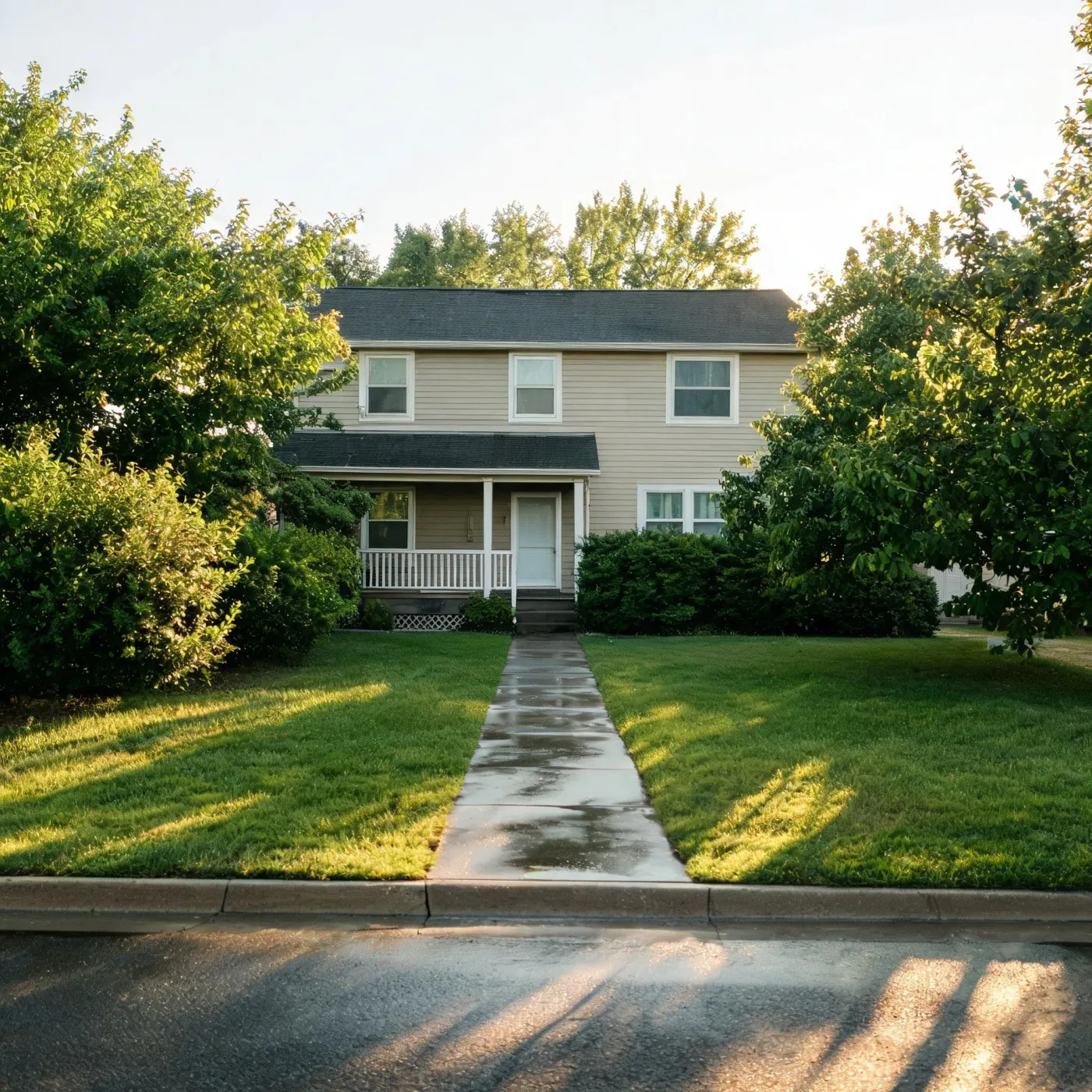
A two-story house with beige siding, a covered front porch and dark shingled roof, set behind a mown lawn with a wet concrete walkway leading from the street curb, flanked by large green trees and shrubs.

New Jersey summers run a dew point of 63°F on average across June, July and August, measured at weather stations around the state. That's heavy air, and your heat pump has to wring the moisture out of it before it can cool the house. A unit with a dirty coil or a weak capacitor struggles more with that than it would with dry heat, because moving humid air through the fins takes more work. You'd notice it as a system that runs longer stretches without shutting off, or a house that feels cool but still damp. The coil needs to be clean and the charge needs to be right for the heat pump to keep up with air this heavy.

NASA POWER T2MDEW county cells weighted by homes

A gray outdoor condenser unit sits on a concrete pad against a house wall with horizontal siding above a stone veneer base, with an electrical disconnect box and conduit on the wall and a leafy shrub in mulch to the left.
The disconnect box is mounted and labeled, the pad is clear, and the unit sits ready to run without anything crowding it.
An outdoor air conditioner condenser unit on a concrete pad beside a house with horizontal siding above a concrete block foundation, with insulated refrigerant lines and a vertical white pipe on the wall.
Refrigerant lines run exposed along the block foundation, and weathering like this is a sign the unit hasn't been looked at in a while.

A heat pump tune-up in New Jersey means checking the refrigerant charge, cleaning the outdoor coil, testing the reversing valve, and going over the electrical connections and capacitor, because your system has to carry both the humid part of summer and a share of the winter heating load. Skip it and the unit works harder to do the same job, and at 22.48 cents a kilowatt-hour that shows up on your bill fast. None of that has to stay a guess. Once you send the form, you're done looking for someone to call. A contractor who covers your area gets your request and reaches out, and the job of finding the right person for a heat pump that runs this hard, this long, is off your plate.

Corner of a house with cream horizontal lap siding and tree shadows, beside a covered porch with a square column, wooden deck, steps, white balusters, and a shrub at right.
Corner of a white clapboard house with a multi-pane wood window in warm low-angle sunlight, with hydrangea shrubs and other green foliage growing along the base and dark trees behind.
A wooden front door with divided-light glass panes set under an arched entry on a white shingled house, with a black wall lantern, a tall gray planter, flowering shrubs, and a flagstone walkway.
Exterior corner of a house with cream horizontal siding, a dark-framed three-section window, and a stone veneer foundation, with white hydrangeas and clipped shrubs along a paved walkway and tree branches overhead.
Corner of a white-clad house with a dark-framed grid window, dark downspout and eaves, surrounded by trimmed hedges, shrubs, white hydrangeas and a leafy tree in sunlight.

A local pro for your heat pump maintenance

Send the form, and lining up the heat pump tune-up stops being yours to chase.

Send my request

It costs nothing to send, and you don't have to hire anyone.