





A row of white Colonial-style houses with glowing windows photographed at dusk along a road bordered by a stone wall.

AC Repair in New Brunswick, NJ

Tell us about the job

Takes about a minute. No obligation.

RepairCentral ACMiddlesex County, NJ
Step 1 of 2

What ZIP code is the job in?

A tech starts outside at the condenser, checking the compressor and fan before touching anything inside. They'll check refrigerant pressure with gauges, since too little points to a leak and too much points to a different problem entirely. Inside, they check the evaporator coil for ice or buildup and test the capacitor, since a weak one makes the compressor strain or the fan run slow. They'll also pull the air handler panel and look at the blower wheel and motor, because a dirty wheel cuts airflow even when everything electrical checks out fine. Once they find the actual cause, they can tell you what it takes to fix it and whether it's a quick repair or a sign the system is wearing out.

4 months
June through September, your air conditioner is on duty
85°F
the average summer afternoon it cools against
29 hail events
in ten years, and hail bends the fins on outdoor coils
139 wind events
in ten years, and wind drives debris into outdoor units
Isometric grayscale illustration of a cutaway house interior showing a furnace with ductwork, interior rooms with furniture, and an outdoor condenser unit connected by lines at the exterior wall.
Your air conditioner works hardest from June through August.

NOAA nClimDiv, 1991–2020 normals

New Brunswick summers run June through September, with afternoon highs averaging 85.

Four months of steady work is normal for a system here, so a breakdown now usually means a part wore out, not that the weather asked too much of it.

At 19.34 cents a kilowatt-hour, a struggling AC costs you more here than elsewhere

Power costs 19.34 cents a kWh statewide
Cooling runs June through September
Summer afternoons average 85°F

Middlesex County saw 192 severe weather events between 2015 and 2024, most of it damaging wind. None of that is what's wearing out your AC. Wind and hail hit the condenser cabinet outside, and that unit is built to take weather, rain, sun, cold, all of it. A power outage can trip a system off, but most units come back on fine once power's restored, so that's rarely what you're dealing with weeks later. If your AC quit or stopped cooling right, look at the part first, not the forecast.

The house's age and the AC's age are two different questions

Half the homes in Middlesex County were built in 1974 or earlier, half in 1974 or later. Either way, the house age doesn't tell you the age of the AC inside it. What's actually wrong usually comes down to one worn part, and that's what's worth finding out.

Find a contractor
A gray cylindrical air conditioning condenser unit mounted on a concrete pad next to a light-colored vinyl-sided house exterior.

Why AC units actually fail

Most AC failures trace back to a handful of parts, not the whole system giving out at once. The capacitor usually goes first. It gives the compressor and fan motor the kick they need to start, and once it weakens, the compressor hums without starting, or the fan turns slow. Run it on a bad capacitor long enough and the compressor itself can wear out from the strain, which is a different repair entirely. The condenser fan motor seizing up causes similar damage, since the compressor has nowhere to shed heat once the fan stops moving air across it. Refrigerant doesn't get used up the way fuel does, so a system that's low is leaking somewhere, usually at a coil joint or a fitting, and it keeps leaking until that spot is found and sealed. None of this runs on a schedule. A part that's been fine for years can quit in a week, and that's just what wearing out looks like.

What you'll actually notice first

Warm air coming out of the vents, or air that barely moves at all. The system shutting off a few minutes after it starts, then kicking back on, over and over. A smell when it first turns on, or a sound it didn't make before, a click that repeats, a buzz, a hard clunk at startup. Water pooling near the indoor unit. Each of these points somewhere specific, which is why it's worth noting exactly what you're seeing and hearing before anyone shows up.

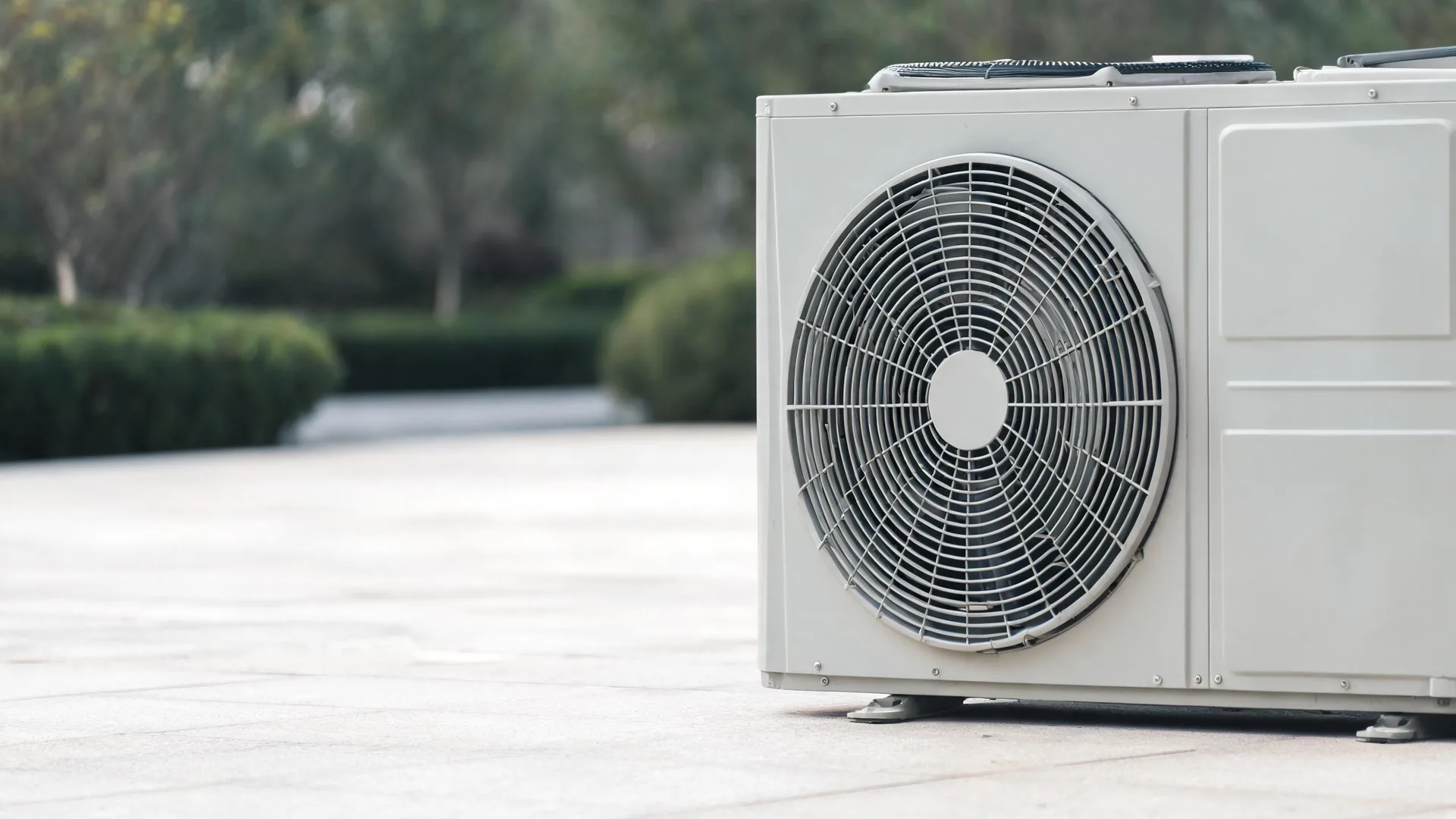
Why the delay matters

A coil that's icing up will keep icing up every time the system runs, until airflow stops and the coil is solid. A motor that's straining to start will keep straining on every cycle, and strain like that wears the motor down faster than it would otherwise fail. Short cycling puts that same repeated stress on the compressor, the part of the system that's hardest to replace on its own. Letting a system run this way doesn't give it a chance to recover. It just repeats the same damage each time it kicks on.

Aerial view of a square outdoor air conditioning condenser unit on a concrete pad beside a house wall with a sliding glass door.

A new air conditioner would save little on running costs in Middlesex County, so the repair decision comes down to the unit's condition.

  • A new one at the federal minimum, 13.4 SEER2$330 a year
  • An older air conditioner$350 a year

Estimates for a typical Middlesex County home, compared with an older unit built to the previous federal minimum, from EIA household energy data, New Jersey fuel prices and NOAA climate normals. Your home will differ.

Repair makes sense when a part like a capacitor or contactor has failed.

Replacement makes sense when the compressor has failed or the system uses R-22 refrigerant, which is no longer made.

A repair makes sense when one part failed and the rest of the system is sound. A new capacitor or fan motor is a contained job, and once it's in, the system runs the way it did before. Replacement starts to make more sense when the compressor is the part that failed, since that's the most expensive component in the system, and the labor to replace it alone can rival putting in a new unit. Age matters less than what's already gone wrong. A system that's needed repair after repair in close succession is telling you something different than one that's run clean for years and finally needs a part. It's also worth asking whether the refrigerant the system uses is still widely available, since older systems built for a phased-out refrigerant can make repairs harder to source and more expensive than the same fix on a newer unit. A good tech will tell you plainly when a repair is the right call and when it's just delaying a bigger expense.