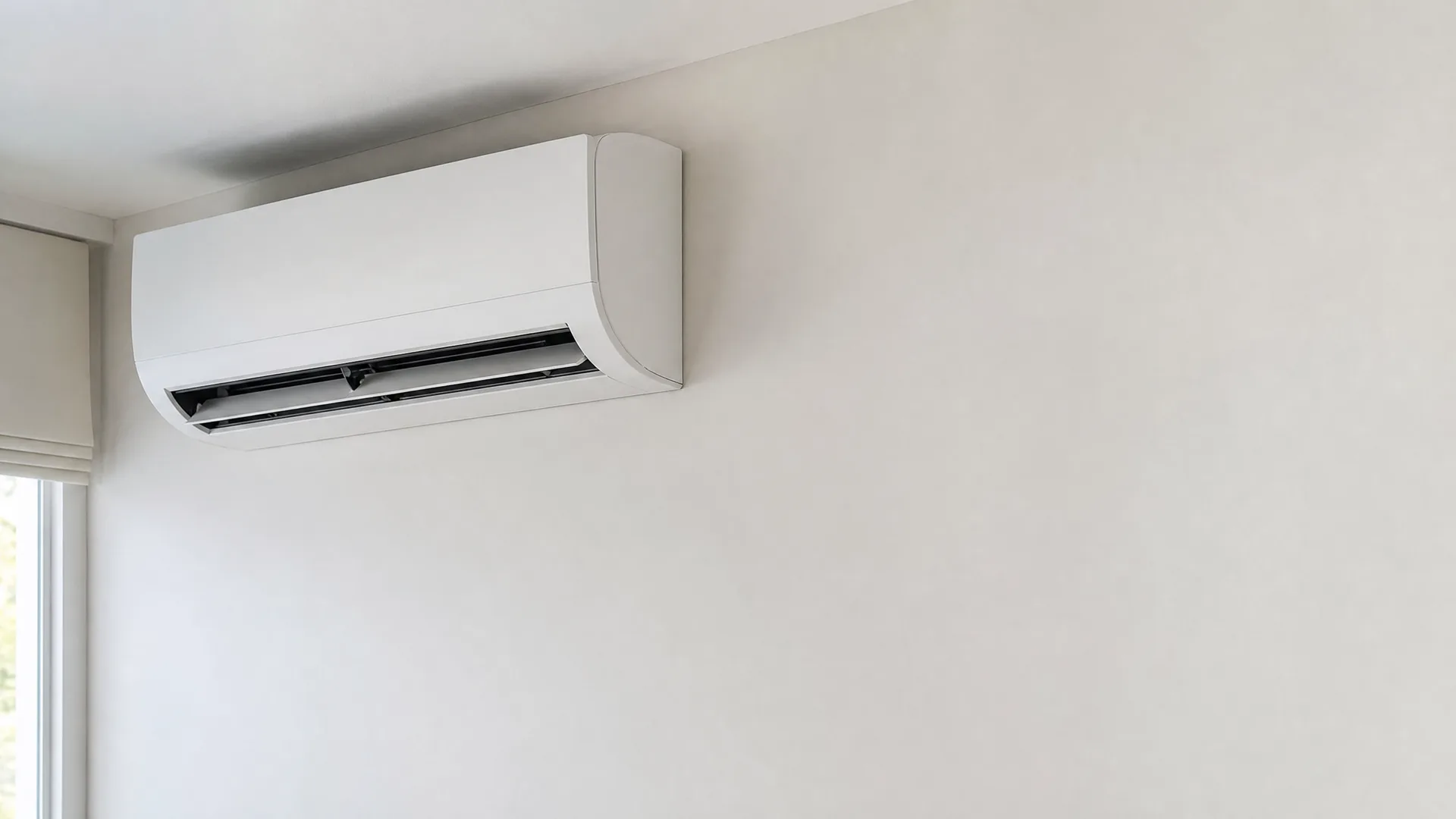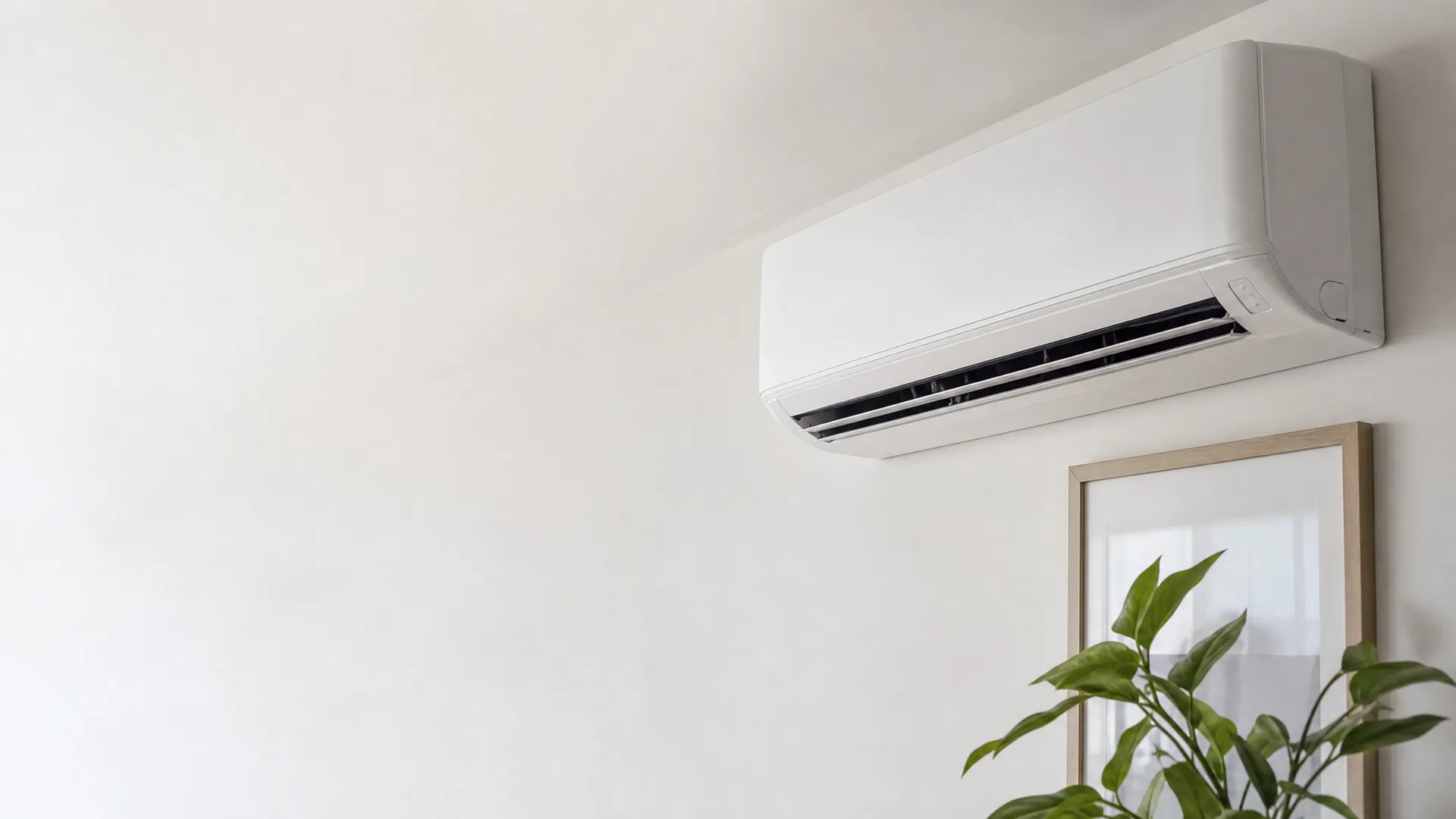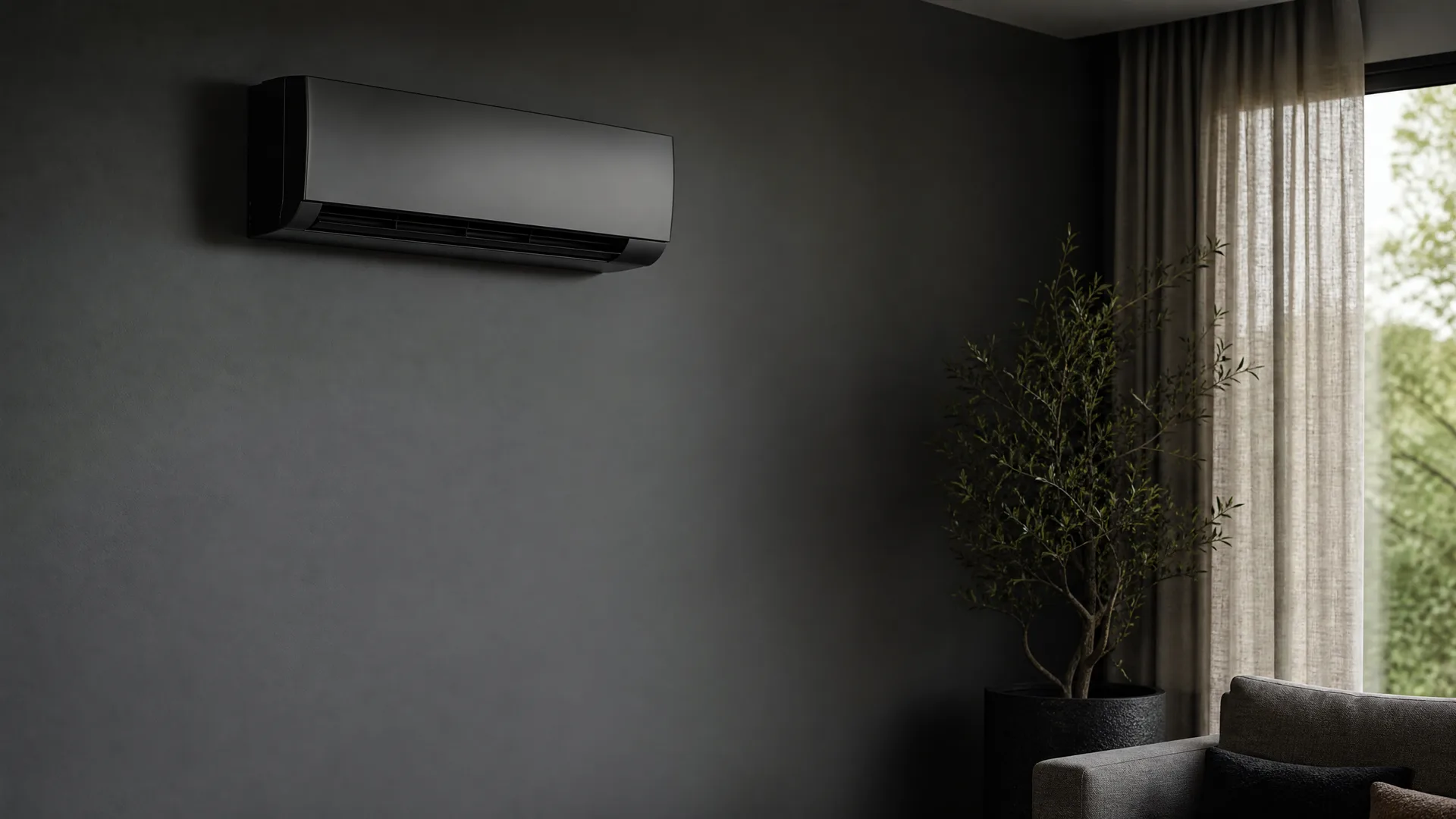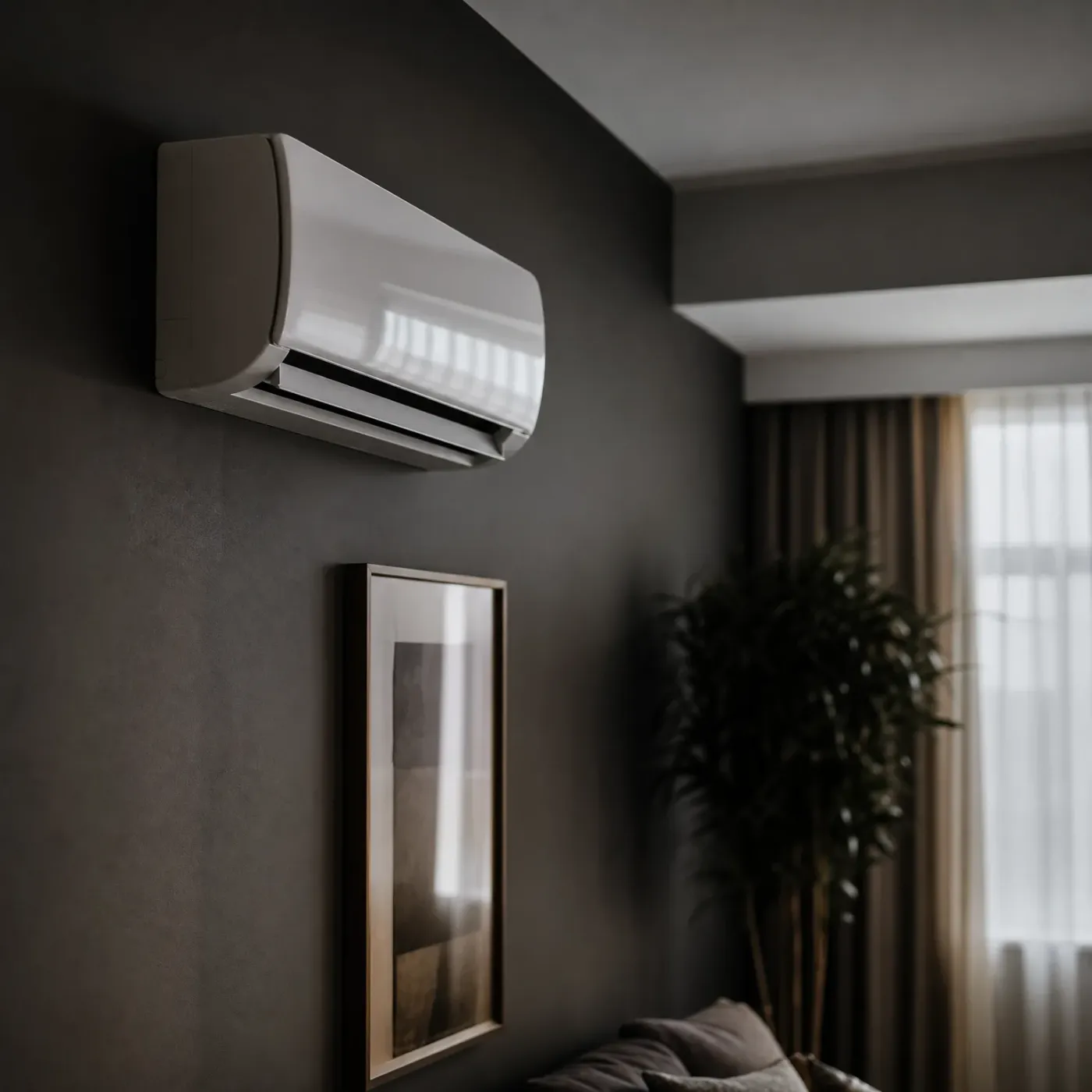






A white wall-mounted mini-split air conditioner on a dark gray interior wall above a framed picture, with a potted plant and curtained window to the right.

Skip the calls to every shop

Why your mini split light is blinking in New Jersey

A blinking light on your mini split usually points to one thing: a filter that needs cleaning, a frozen coil, or a sensor tripping. The page below walks through what each blink pattern means and what it takes to fix. Skip the search for who's reliable and nearby, the back and forth calls, and the retelling of what your unit's doing to three different companies.

Skip the calls

A blinking light on your mini split is the unit telling you which part needs attention. Most brands flash a code, a number of blinks repeated in a pattern, and each pattern points to something specific: a dirty filter, a coil that's iced over, a drain that's backed up, or a sensor that's failed. Some units will keep running in a weakened state while the light blinks. Others shut down and won't restart until the fault clears. With how muggy New Jersey summers get, a mini split that's losing airflow or icing over will struggle to keep a room comfortable right when you need it most, and the blinking is usually the first sign something's wrong before the room starts feeling it. The exact meaning depends on the brand and the blink count, so matching the pattern to your model's code is the first step before anything gets taken apart.

A white wall-mounted mini-split air conditioner on a beige interior wall, with a window at left showing trees and a wooden fence, and dark wood flooring below.
A steady light means the system is reading its sensors clean and cycling the way it should.
A white wall-mounted mini-split air conditioner indoor unit with dark louvered vents, installed near the ceiling on a beige wall below white crown molding.
A blinking light like this one means the board has flagged something it can't push past on its own.

The light is not random. It is the board's way of reporting a fault it found when it checked its sensors, and it reports that fault the same way every time, a count of flashes, a pause, then the count again if the code repeats in sets. That count gets stored, so it will keep flashing even after the room cools down or the unit shuts off on its own. A tech reads the pattern first, then checks it against what it can mean, since a frozen coil and a low refrigerant charge often trigger the exact same code. Outdoor units sometimes carry a second light, separate from the one indoors, and a code on one board does not always explain what is wrong on the other, so both get checked. Cutting power at the breaker will make the light go dark, but the drain line or filter that caused it is still exactly as it was. If the pattern itself keeps changing instead of repeating, that usually means more than one sensor is tripping at once.

How the blink code works

  • The blink pattern is counted the same way every time: count the flashes, pause for the gap, then count the next group if the code repeats in sets.
  • Most indoor units store the code in a small memory chip, so the same pattern will keep flashing until the fault is cleared at the source.
  • A frozen coil often shows up as the same code as a low refrigerant charge, because the board reads the symptom, not the cause.
  • Some outdoor units carry their own separate light, and a tech checks both boards since a code on one doesn't always explain a code on the other.
  • Clearing the code by cutting power at the breaker only resets the display, it does nothing to the clogged drain or dirty filter that triggered it.
  • A pattern that changes from one day to the next, rather than repeating the same count, usually means more than one sensor is tripping.
A woman with long dark hair in an olive green shirt over a white top sits indoors, looking off to the side and smiling slightly, with a blurred kitchen, dining table with a plant in a vase, striped cushions, and a glass door in the background.
A woman in a cream knit sweater stands in a home interior looking to the side, with a bookshelf, armchair, framed pictures and a potted fern in the background.
A woman with long brown hair in a cream knit sweater sits on a gray couch indoors, looking off to the side toward a window.
A woman with long wavy auburn hair in a dark sweater stands indoors looking off to the side, with a stone fireplace, shelves and a bright window behind her.

Why the coil freezes here

A mini split coil ices over when airflow across it drops, usually from a dirty filter or a blower that's struggling. Once summer humidity climbs, a coil already running cold has less room for error, and ice builds fast. The board reads the coil temperature through a sensor, and when it sees the coil running colder than it should for longer than it should, it blinks the code and locks out the compressor. That lockout protects the compressor from pulling in liquid refrigerant instead of gas, which is the kind of damage that turns a filter cleaning into a compressor replacement.


Why the code won't clear itself

The board checks its sensors every time it starts a new cycle, not continuously while it's blinking. So shutting the unit off and back on won't clear a code if the underlying problem, a clogged filter, a blocked drain, a failed sensor, is still there. Power here isn't cheap, and a mini split that keeps tripping and restarting is burning cycles without ever running long enough to cool or heat the room. A contractor working the problem checks the same sensor the board checks, confirms what tripped it, and clears the code once that part is actually fixed.

A white wall-mounted mini-split air conditioner indoor unit with visible dust and staining along its lower vent, installed on a plain pale wall.
Before you get your mini split repair
A white wall-mounted mini-split indoor unit installed high on a gray interior wall, with a window at left and part of a light gray sofa with a dark cushion at lower right.
After you get your mini split repair

Skip calling around

Your request goes to one pro, not a list of companies.

You're not committing to anything by asking.

A white wall-mounted mini-split air conditioner unit installed near the ceiling on a plain light-colored interior wall, with a window edge at the far left.

What a blinking light costs you in July

A mini split that keeps blinking and shutting itself off is a mini split that isn't cooling the room you're trying to keep comfortable. If it's the room where someone sleeps or where someone sensitive to heat spends their day, you feel that fast. Power here isn't cheap, and a unit cycling on and off while it tries to clear a code still pulls power without doing the job it's supposed to do.

A white wall-mounted mini-split air conditioner near the ceiling of a white interior wall, with a framed picture and a green leafy houseplant in the lower right corner.

What waiting on it risks

A coil that's iced over and ignored keeps icing. Water from the melt has to go somewhere, and if the drain line is what's clogged, it can back up into the wall or the floor below the indoor unit. A dirty filter left in place makes the blower work harder, and that's the kind of strain that turns a cleaning job into a part replacement if it goes on long enough.

Call a Tech or Wait It Out

Call a repair tech

  • A tech can read the blink pattern against the manufacturer's code and confirm what the board is actually flagging, instead of guessing from a chart online.
  • If the coil is frozen, it needs to thaw fully before anyone can see what caused it, and a tech knows how to check the filter, the blower, and the refrigerant charge once it has.
  • A drain line clog that's tripping the float switch gets cleared properly, so the same blink doesn't come back in a week.
  • A local tech who services mini splits all summer has usually seen your brand's blink codes before and knows which ones are common and which ones mean a bigger problem.
  • Getting it fixed now means the room it conditions goes back to cooling instead of sitting warm while you figure out the pattern yourself.

Wait it out

  • The code will keep flashing until the fault clears, so leaving it alone doesn't reset anything on its own.
  • If the cause is a dirty filter, the system may keep trying to run and shutting itself off, which puts more strain on the compressor each time.
  • A frozen coil left to sit can drip water past the pan as it melts, especially if the unit is mounted over flooring or furniture.
  • Humidity in a New Jersey summer climbs fast, and a unit that's cycling off on its own isn't pulling that moisture out of the room.
  • The longer a refrigerant or sensor issue goes unaddressed, the more it can affect other parts of the system that were working fine before.
Single-story house with light gray horizontal siding, dark gray shingled roof with two front gables, a white front door, and three windows, fronted by a concrete walkway and patchy green and brown lawn under a clear blue sky.

New Jersey summer air holds a lot of moisture. Averaged across June, July and August, the dew point here runs 63°F, the kind of sticky that NOAA's climate data backs up. Your mini split has to pull that moisture out of the air before the room feels dry, not just cool. That's extra load on the coil and the blower every single day of summer. When airflow is already reduced by a dirty filter, this is the air it's working against, and a coil that's running on the edge has no cushion left. That's often when the light starts blinking.

NASA POWER T2MDEW county cells weighted by homes

Why does the light blink a few times, stop, then start over?

You've counted the flashes but the pattern keeps looping, a few blinks, a pause, then the same few blinks again. It feels like it should mean something specific, but without knowing how the system is built, a repeating loop just looks like the unit is stuck or confused rather than telling you anything useful.

That pause is the board resetting the count so you can read it again

The board isn't stuck. It's repeating the code on purpose so you have more than one chance to count it right. The pause is the gap between groups, and the group of flashes before and after it is the same number every time. A pattern of three blinks, a pause, three blinks again, means the same fault both times, not two different problems. It will keep looping like this until whatever tripped it gets cleared, which usually means the indoor unit gets power cycled or a tech resets the board after fixing what caused the code. If the pattern changes partway through, that's worth noting, since it can mean a second issue showed up while the first was still active.

A woman with hair in a bun sits on a couch holding a sleeping child, both wrapped in a chunky knit blanket, in a dimly lit room with a lamp and bookshelves behind.
An older woman with short blond hair in a cream turtleneck sweater stands smiling and looking off-camera in a kitchen, with a loaf of bread, a lit candle, a window showing darkness outside, and wood cabinets behind her.

Power costs 22.48 cents per kilowatt-hour statewide

At 22.48 cents per kilowatt-hour, a mini split that keeps blinking and restarting is pulling power without actually cooling the room. A unit cycling on a fault runs the compressor in short bursts, which costs more than a system cooling normally, so that blinking light is worth catching early.

EIA-861 2025 statewide residential average

  1. The board reads a sensor value outside its normal range

  2. The control board matches that reading to a fault code

  3. The indoor unit flashes the code on its display light

  4. The system locks out the compressor until the fault clears

A closed silver laptop and a dark ceramic mug of coffee sit on a wooden table in a dim kitchen, with a window showing a sunset at left and a wall shelf, plant, and stove in the background.

What the blinking light comes down to

A blinking light means the board found something outside its normal range and stopped the compressor rather than keep running on it. The pattern tells you which sensor tripped. The fix depends on what's behind it, whether that's a filter long overdue for a clean, a coil that iced over, or a drain line backed up and signaling float switch. None of that gets sorted by staring at the light longer.

A tech who works on these units all summer in New Jersey has seen the pattern before and knows what it usually means on your brand, so there's no guessing from a chart you found online. Instead of calling around to find someone who answers, explaining the blink count twice to two different companies, and sitting on quotes to compare, you get matched with one licensed local contractor who takes the call from there.

A dark ceramic mug on a round wooden table beside a light grey sofa with a woven cushion and knit throw, with a window, potted plant, floor lamp and wooden cabinet blurred in the background.
A dark wall-mounted mini-split air conditioner on a gray interior wall, with a potted olive-like tree, sheer curtains over a window showing green foliage, and a gray sofa in the lower right corner.

Describe it once

The pro who reaches out is licensed in New Jersey.

RepairMini-splitNew Jersey
Step 1 of 2

What ZIP code is the job in?