




What size heat pump a New Jersey home needs

Send the form and the search for an installer is over.

New system or replacementHeat PumpNew Jersey
Step 1 of 2

What ZIP code is the job in?

What size heat pump do I need for my house in NJ?

Sizing a heat pump isn't just about square footage. You want it to keep the house even when it's humid in July and cold enough in January that gas furnaces in neighboring homes are running nonstop. Getting the number wrong in either direction leaves someone at home uncomfortable, whether that's a system that never quite catches up or one that cycles on and off without pulling the moisture out of the air.

It depends on a load calculation, not square footage alone

A contractor sizes a heat pump by running a load calculation on your house, called a Manual J, which looks at your square footage along with your insulation, windows, and how much sun and shade the house gets. Square footage alone can point you a size too big or too small. An oversized unit cools the air fast but shuts off before it pulls the humidity out, so the house feels sticky even when the thermostat says it's cool. An undersized one runs constantly in a New Jersey summer and still struggles to keep up in winter. The right size is the one matched to your house specifically, not a number pulled from a chart.

  1. A contractor measures every room, window, and wall for heat loss and gain.

  2. That load calculation sets how many BTUs your home actually needs.

  3. The contractor checks your ductwork size and layout against the new unit.

  4. Outdoor and indoor units get matched so capacity and airflow line up.

A woman with long gray wavy hair in a knit sweater sits on a light sofa with a striped pillow, looking toward a window in a room with wooden shelving and a potted plant.
A woman in a gray cowl-neck sweater stands in a living room with built-in shelves, a lamp, a sofa with cushions, and a bright window behind her, looking to her right.
A woman with long wavy brown hair in a dark blue sweater sits on a sofa with cushions, looking off to the side, with a wooden shelving unit, houseplant and bright window behind her.
A woman with long dark hair in a gray knit sweater sits indoors smiling and looking off to the side, with a window, houseplant, framed picture, and shelving blurred behind her.

Why bigger isn't better

An oversized heat pump cools the house fast, then shuts off before it pulls the moisture out of the air. You end up with rooms that feel cold and sticky at the same time, especially in a New Jersey July. The unit also cycles on and off more, which wears on the compressor sooner than steady runtimes would. A unit sized to the load calculation runs longer, steadier cycles, and pulls humidity down along with the temperature. That's the difference between a house that feels cool and one that just reads a lower number on the thermostat.


Why undersized runs constantly

A heat pump that's too small for the house never catches up. On the coldest nights in January, it runs nonstop and still loses ground, leaning hard on backup electric resistance heat to make up the difference. Since power in New Jersey is expensive, that backup heat shows up fast on the bill. In summer, the same undersized unit struggles through the muggy stretch without ever bringing the house down to a comfortable temperature. Correct sizing means the unit can handle both the January low and the July high without leaning on backup heat to get there.

A woman and a child wrapped together in a thick knitted beige blanket on a sofa, both with eyes closed, beside a lit table lamp in a dim room.
A smiling older woman with gray hair in a loose bun wearing a ribbed beige sweater stands in a dimly lit kitchen beside a window showing darkness outside, with a loaf of crusty bread on a wooden board in the foreground.

Get the size wrong and you feel it before you understand why. The electric bill climbs, and that stings more here than in most states, since power costs what it does in New Jersey. If the unit is too small, it falls behind on the coldest nights, the ones when your neighbor's gas furnace just keeps running, and you end up reaching for a blanket instead of the thermostat. Too big, and it cools the house fast but shuts off before it has pulled the humidity out of the air, so a July afternoon still feels sticky even with the AC on. Either way, the unit works harder than it should. It switches on and off more than it needs to, parts wear down sooner, and rooms stop holding a steady temperature. The thermostat might read exactly what you set it to, and someone in the next room still feels too warm or too cold. That gap between the number on the wall and how the house actually feels is what correct sizing is supposed to close.

What the Wrong Size Costs You

  • A heat pump sized wrong runs up your electric bill fast, and power here already costs more than almost anywhere else.
  • An undersized unit can't keep up when it's cold enough for your neighbor's gas furnace to run nonstop, so you're stuck layering blankets.
  • An oversized unit leaves the air damp even when the house feels cool, which is exactly the sticky discomfort a New Jersey summer causes.
  • Short cycling from a wrong-sized unit wears out parts faster, so repairs show up sooner than they should.
  • A unit that's constantly switching on and off struggles to hold one steady temperature room to room.
  • The wrong size can leave the thermostat satisfied while the people in the house still feel too warm or too cold.
A dirty outdoor air conditioner condenser unit with debris on its coil grille, sitting on a concrete pad beside a light-colored horizontal siding wall, with bare dirt ground in front and a shrub at right.
Before you get your heat pump installation
A gray outdoor condenser unit on a concrete pad beside a house with horizontal lap siding, with a metal disconnect box and refrigerant lines on the wall, river rock and mulch to the sides, and a green shrub at right.
After you get your heat pump installation

Before

You're guessing at BTUs from a chart, or trusting whatever size the last system happened to be, while the house runs hot and sticky some rooms, cold in others.

Find a licensed pro

After

A unit sized to your actual walls, windows, and ductwork, matched indoors and out, keeping the house even through July's humidity and January's cold.

Find a licensed pro

Power costs 22.48 cents per kilowatt-hour statewide

At that rate, every kilowatt a wrongly sized heat pump wastes shows up fast on your bill. A unit too big or too small cycles more or runs longer to keep up, and in New Jersey that extra running time costs more than it would almost anywhere else.

EIA-861 2025 statewide residential average

A gray outdoor condenser unit on a concrete pad beside a house with gray lap siding, connected by conduit and refrigerant lines to a wall-mounted disconnect box, with a green shrub and mulch bed at left.
Sized right, the unit cycles in full runs long enough to pull the damp out of the air before it shuts off.
An outdoor air conditioning or heat pump condenser unit on a concrete pad beside a house with horizontal vinyl siding, a gray electrical disconnect box and conduit on the wall, and a concrete walkway in the foreground.
Dirt on the coil and a sagging cabinet are signs it's been fighting the wrong load for years.
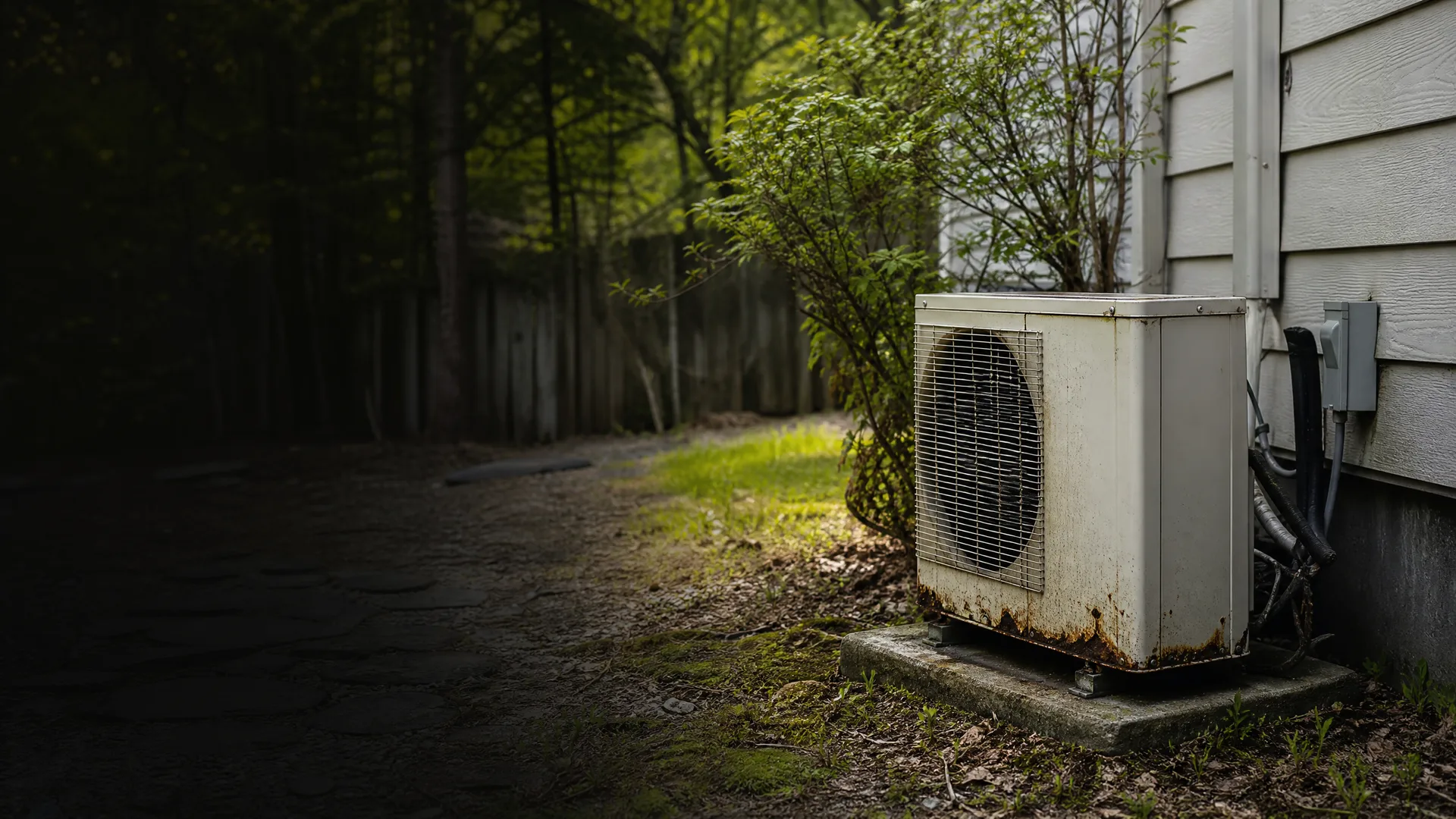
A weathered, rust-streaked outdoor heat pump unit on a concrete pad beside a house with horizontal siding, with shrubs, moss and a dim wooded yard and fence to the left.

The unit sits against the side of the house, half shaded by the fence. It's one of those first mild days in spring, warm enough that the cover came off last week. Rust has worked along the base of the cabinet, a reddish line where the metal meets the concrete pad. You crouch down to clear a season's worth of leaves out from under it, and that's when you notice the cabinet listing slightly to one side, like the pad underneath has started to sink. It ran fine all winter. But looking at it now, you wonder how long it's been working harder than it should, and what a contractor who services these every season around here would say about that rust once he got a look at it.

Done looking for a heat pump pro

Your request stays with one local pro.

No fee to send it, and nothing to sign.

A gray outdoor air conditioner or heat pump unit on a concrete pad beside a house with horizontal lap siding, with conduit and refrigerant lines running up the wall and green shrubs and mulch at left.

Running clean

Shrubs trimmed back, lines running straight into the wall, the grille clear. Air moves through it the way it was built to. A unit sized to your house and kept clear like this holds steady through a July afternoon without straining.

An outdoor air conditioning condenser unit on a concrete pad beside a house with horizontal siding and a concrete foundation, with refrigerant lines running to a wall-mounted disconnect box and shrubs at left.

Running dirty

That grille is caked dark with dust and debris. Airflow drops when a coil gets this fouled, and the unit works harder to move the same amount of heat. Left like this, it cycles longer and pulls more power to do less.

Does your house feel off even though the heat pump runs fine?

Some rooms stay warm while others never catch up, and by August the air feels damp even with the unit running. You might notice it cycles on and off every few minutes instead of running a steady stretch, or it runs almost nonstop and the house still isn't comfortable. The electric bill climbs past what you'd expect for the weather. None of this means the equipment is broken. It usually means the size was never matched to your house, and a unit working against the wrong load wears out its parts faster, so a repair call comes sooner than it should.

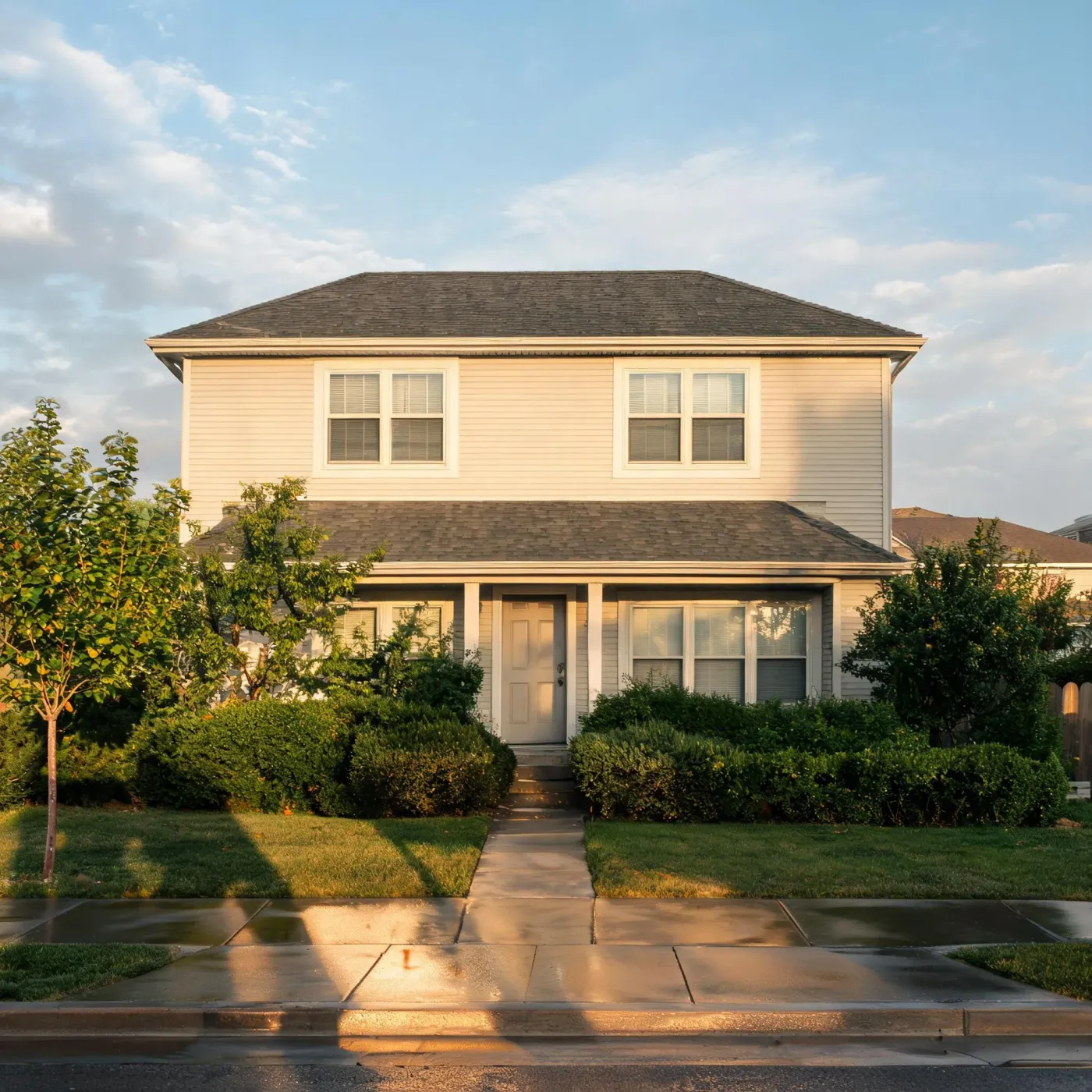
Two-story house with pale horizontal siding and a gray shingled roof, fronted by trimmed hedges, a small tree, a lawn, and a concrete walkway leading to the front door, photographed in low warm sunlight.

Average the dew point across a New Jersey summer and you get 63°F, according to NOAA climate normals. That's the sticky range, where the air feels heavy even before the temperature climbs. A heat pump sized right for your house runs long enough in that air to pull the moisture out along with the heat, so the house actually feels dry when it's done. One sized wrong cools the room fast and shuts off before it finishes the job, so you get a house that's cold and still clammy. That's the feeling worth paying attention to, more than the thermostat number.

NASA POWER T2MDEW county cells weighted by homes

Load Calculation vs. Size Chart

Load calculation

  • A contractor measures every room, window, and wall and adds up what the house actually loses and gains in heat.
  • The result accounts for how your home is built, not just its square footage.
  • A two story colonial and a ranch of the same size can come back with different BTU numbers.
  • Ductwork gets checked too, since a unit sized right on paper still struggles if the ducts can't move that much air.
  • This takes a visit and some measuring, so you get a number specific to your house instead of a guess.

Size chart

  • A chart gives you a BTU range based on square footage alone, the same way for every house that size.
  • It skips window count, insulation, and ceiling height, so two different homes get the same number.
  • It can't tell you whether your existing ductwork can handle the unit it recommends.
  • It's a starting point for a ballpark figure, not a number a contractor would install to.
  • Going by the chart is how homes end up with a unit that short cycles or one that never keeps up.
A gray outdoor condenser unit on a concrete pad beside a light-colored lap-sided house, with a wall-mounted disconnect box and conduit, dark mulch, and a green shrub to the right.

Clear and unobstructed

Lines run straight from the disconnect box into the unit, and the grille is open to the air. A heat pump sized right for your house and kept clear like this pulls the load it was built for, no more and no less, straight through a humid July afternoon.

An outdoor air conditioner condenser unit on a concrete pad beside a house with horizontal lap siding, with a gray electrical disconnect box and conduit on the wall and bare dirt and mulch in the foreground.

Choked with buildup

Grime has packed into the grilles, thick enough to see from a few feet off. Dust like that blocks airflow across the coil, so the unit works harder to move the same amount of heat. A unit that's been fighting a load it wasn't sized for collects this faster.

The right size comes from a load calculation done on your house, not a number pulled off a chart. Get that right and the unit runs long enough each cycle to pull the damp out of the air in July and keeps up when your neighbor's furnace is running nonstop in January, without driving up a power bill that's already steep here. A local contractor who works on heat pumps all year knows which parts of a New Jersey house tend to throw the load off, a sunroom addition, old windows, ductwork sized for a different system, and checks for it instead of guessing. You'll hear from one licensed contractor, not a handful of companies competing for the job, so there's no round of calls to sort through. Someone local looks at your walls, your ducts, your current unit, and sizes the replacement to what your house actually needs.

Sunlit corner of a room with a wooden sideboard holding a ceramic vase of olive branches and a dark wooden bowl, beside a white-framed window, a hardwood floor and woven rug.
A wooden cabinet holding a pale ceramic vase with leafy branches stands beside a beige wall in a sunlit room with hardwood floors, a jute rug, and a window showing green foliage outside.
Sunlit room corner with a beige upholstered sofa holding a rust-brown cushion, beside floor-length linen curtains at a window, over a wood floor with a woven rug.
Corner of a room with beige walls, a framed photograph, a floor-length linen curtain beside a window, an upholstered armchair with a knit pillow, white baseboards and trim, wood flooring and a pale rug.
Sunlit living room corner with a beige upholstered armchair with a cushion, linen curtains beside a wooden-framed window, green vertical panelled wall with a framed print, and a wooden table edge over a woven rug.

It's off your list after this

Your request goes to one pro, not a list of companies.

Get a licensed local pro

Sending the form costs nothing.