How often to change your AC filter in New Jersey

Fill out one form instead of calling around for an air conditioner tune-up.

Start one form

How often should I change my AC filter in NJ?

You've got the AC running most days once the heat and humidity settle in, and you're not sure if the filter needs attention every month or if you can stretch it longer. A dirty filter is an easy thing to forget about until the system is working harder than it should or the air coming out doesn't feel right.

Every 1 to 3 months during the summer

A standard 1-inch filter needs changing every 1 to 3 months when your AC is running regularly, and in New Jersey that means checking it through the full stretch from June into September. Humidity in the air makes filters load up faster, since the system is pulling more moisture and dust through as it works to keep the house comfortable. A filter that's clogged forces the blower to work harder, which raises your electric bill in a state where power already costs more than most places. If anyone in the house has allergies or there's a pet shedding around, check closer to the one-month mark instead of waiting the full three.

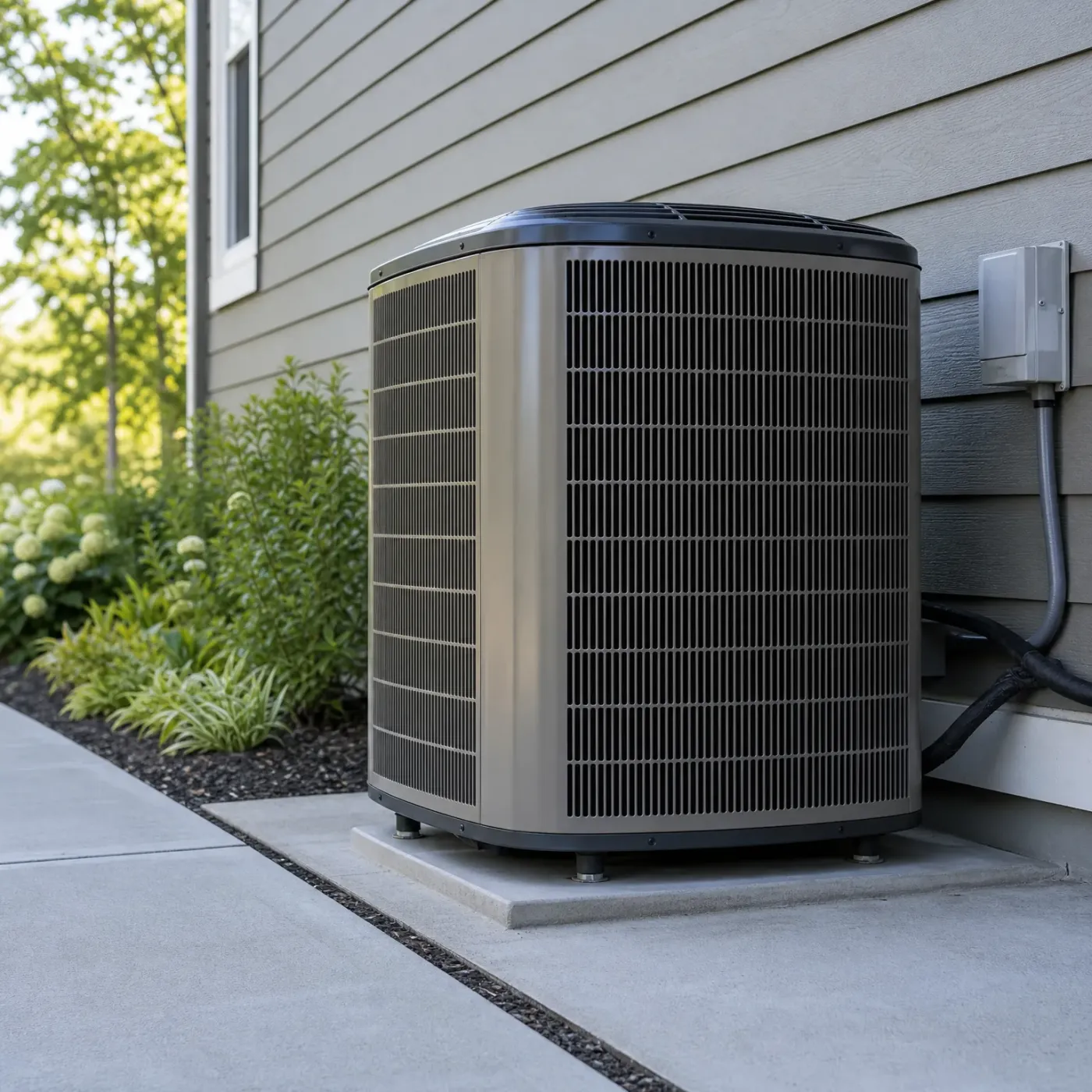
A gray outdoor air conditioner condenser unit on a concrete pad beside a house with horizontal siding and a light stucco wall, with a disconnect box and refrigerant lines on the wall and a shrub and mulch bed at left.

What the filter actually does

The filter sits in the return side of the system and catches dust, pet hair and lint before that air crosses the evaporator coil. It doesn't clean the air in your house the way a standalone air purifier does. Its job is narrower: keep that coil clear so air can pass through it. When the filter loads up with debris, the system has to pull harder to move the same amount of air, and that strain shows up on the coil first, then on your electric bill.

A gray outdoor air conditioning condenser unit on a concrete pad surrounded by gravel, next to a white horizontal-lap-sided house wall with an electrical box and conduit, against a blank white background on the left.

Why a clogged filter costs you

Once airflow drops, the evaporator coil can't shed heat the way it's built to, and in a muggy New Jersey summer that means longer run times just to hold the temperature you set. Power here runs expensive, so a system working against a dirty filter isn't a small thing on the bill. A clogged filter can also let the coil ice over, and once that happens the system may stop cooling until it thaws.

1-inch vs Thicker Filter

1-inch filter

  • A 1-inch filter has less surface area, so it loads up with dust faster once the AC is running daily.
  • Check it every month during the stretch from June through September, since this is when it's working hardest.
  • These are the cheapest filters to replace, so a monthly swap doesn't add up to much over the summer.
  • Most central systems built for a 1-inch filter were designed around that size, so swapping isn't optional.
  • A clogged 1-inch filter restricts airflow sooner, which makes the blower work harder and can ice the coil.

4-inch or 5-inch filter

  • A thicker filter holds more dust before it chokes off airflow, so it can go three to six months between changes.
  • These filters cost more upfront, but you're buying one every few months instead of every few weeks.
  • Not every furnace or air handler has the housing for a 4-inch filter, so check what your system takes before switching.
  • Even with the extra capacity, a humid New Jersey summer with the AC running daily will still wear through one in a few months, not a year.
  • If pets shed in the house, that extra dust will shorten the interval even with the larger filter.
A gray outdoor air conditioner condenser unit on a concrete pad beside a house with horizontal lap siding, with a wall-mounted disconnect box and conduit to its right and shrubs to the left.

A filter that's kept up with

This condenser is clean and sitting on its pad with room to breathe, which is what you'd expect when the filter inside gets swapped on schedule. Air moves through the coil the way it's supposed to, so the unit isn't straining to pull cool air through a clogged return.

An outdoor air conditioning condenser unit on a concrete pad beside a house with horizontal lap siding, with a conduit and electrical disconnect box on the wall at right.

A filter that got forgotten

That coil guard caked with dirt usually traces back to a filter that went too long between changes. Once dust gets past it, the coil loses some of its ability to pull heat out of the air, and the unit runs longer to do the same job. A local contractor who services units like this all summer can tell you right away whether the coil needs a real cleaning or just a fresh filter.

A smiling woman with dark shoulder-length hair in a cream V-neck sweater sits at a marble counter with a glass of red wine, with a kitchen and softly lit living room behind her.
A woman in a dark green sweater laughs while seated at a marble kitchen island with a glass of red wine, with open shelving, cabinets and a living room visible behind her.
A woman with long dark hair in a cream knit sweater laughs while looking off to the side, seated at a counter with a glass of red wine, in a dimly lit living room with a sofa, lamp, framed pictures and houseplant behind her.
A smiling woman with long dark hair in a beige sweater sits at a marble kitchen counter with a glass of red wine, with a dimly lit living room behind her.
An outdoor air conditioning condenser unit on a concrete pad beside a house with horizontal lap siding, with a gray electrical disconnect box and conduit on the wall and green shrubs and trees to the left.

Skip calling around

The pro who reaches out is licensed in New Jersey.

Skip searching for an air conditioner pro and answer a few questions instead.

Find a licensed pro

Sending the form costs nothing.

A closed silver laptop and a ceramic mug of dark coffee sit on a wooden table in front of two chair backs, with a kitchen counter, tiled backsplash, wooden cutting boards, a vase of greenery and a potted plant by a window behind.

What a skipped filter does to your house

Once that filter loads up, your AC has to pull harder to move the same air through the house. The upstairs rooms get the least of it first, since that's where the duct run is longest. You'll notice the vents blowing weaker before you notice anything else, and the thermostat will run longer to hit the same number. With power costing what it does in New Jersey, that longer runtime shows up on the bill before most people think to check the filter at all.

Let it go further and the coil behind that filter can ice over, which shuts the system down on the muggiest day of the year. That's an emergency call, not a scheduled one, and it means tracking down someone who can come out same day. A contractor local to your area who services this equipment every summer can tell you from the filter alone whether it's been neglected, so when something does need a look, you're not explaining the history from scratch. One call covers it, not three estimates to sort through.

Interior corner of a room with a window and sheer curtain at left, a gray upholstered sofa with a cushion at right, and a round wooden table holding stacked books and a round vase with an olive branch.
An outdoor air conditioner condenser unit beside a house with horizontal siding and stucco, its coil fins covered in white cottonwood fluff that also collects on the surrounding grass and mulch.

Late May, and the cottonwood trees a few yards over have let go. You're out back in the evening, and the fluff is everywhere, caught in the grass, drifting against the fence. You walk past the condenser and stop. The fins are matted white with it, a thick layer sitting right over the coil where the air is supposed to pass through. You didn't notice it building up over the past week or two, just the sudden white coating tonight. The unit is still running, you can hear it, but it's pulling air through that fluff now instead of around it. You make a note to clear it off before the weekend, before the real heat sets in and the thing is working harder than it needs to.


Why does my house feel muggier than it used to?

Walk through the house in the evening and check a few things. The air coming out of the vents feels weak compared to what you remember. Upstairs rooms are warmer than the thermostat setting. The system runs longer to hit the same temperature, and you notice it cycling on again not long after it shuts off. Some homes pick up a musty smell near the vents. These are signs the filter is loaded and the system is working past what it should have to. Left alone, the coil behind that filter can ice over or collect dust it was never meant to touch, and a system straining night after night through a New Jersey summer runs up your electric bill before it runs into bigger trouble.

A gray outdoor air conditioning condenser unit on a concrete pad beside a house with horizontal siding and a stone veneer base, with a wall-mounted disconnect box and conduit, next to a shrub bed and a concrete patio.

Running clean

This condenser sits level on its pad with clear air on every side. The fins are open, the fan isn't straining, and nothing's piled against the housing. That's what a unit looks like when the filter behind it gets swapped before it chokes the airflow down.

An outdoor air conditioner condenser unit on a concrete pad beside a house with light gray vinyl siding, with a gray electrical disconnect box and conduit on the wall, gravel beds and dried plants nearby, and a concrete sidewalk in the foreground.

Running neglected

This older unit sits in a bed of gravel with dried weeds crowding the base and years of weather on the housing. A clogged filter forces a unit like this to work the same way, pulling against restricted airflow until something in it gives out before its time.

A smiling bearded man in a navy crewneck sweater sits at a dinner table with a glass of red wine, plates and glasses in the foreground, in a dimly lit room with a lamp and framed picture behind him.
A woman in a dark gray sweater reclines on a light sofa with eyes closed and a slight smile, under a textured gray blanket with an open book resting on her lap, with a lit table lamp and plant in the background.
  1. Room air gets pulled back through the return grille into the duct.

  2. Air passes through the filter before it reaches the blower.

  3. The blower pushes that air across the evaporator coil to cool it.

  4. Cooled air travels back through the ducts into each room.

A weathered outdoor air conditioner condenser unit on a concrete pad beside a house with horizontal vinyl siding, with a conduit and disconnect box on the wall to the right.
Before you get your air conditioner maintenance
A gray outdoor air conditioning condenser unit on a concrete pad beside a house with horizontal lap siding, with a conduit and electrical disconnect box on the wall and a green shrub in mulch to the right.
After you get your air conditioner maintenance

Power costs 22.48 cents per kilowatt-hour statewide

At 22.48 cents per kilowatt-hour, a clogged filter costs you more every time the AC cycles on, since a unit working to pull air through dust and lint draws more power to cool the same house. Changing the filter on schedule keeps that draw where it should be.

EIA-861 2025 statewide residential average

A gray outdoor air conditioner condenser unit on a concrete pad beside a house with horizontal lap siding, with a wall-mounted disconnect box and conduit at left and a green shrub and mulch bed at right.
This condenser sits on a clean pad with the disconnect close by, nothing blocking the airflow around it.
An outdoor air conditioner condenser unit on a concrete pad beside a house with horizontal lap siding, with a conduit running to a gray electrical disconnect box on the wall.
This one sits against the siding the same way, but a neglected filter behind it means the coil inside is working against dust it shouldn't have to.
A two-story gray horizontal-siding house with multiple gables, a covered front porch with white columns and railing, and a dark front door, fronted by a patchy green and brown lawn under a clear blue sky.

New Jersey summers run thick. Averaged across the state, the dew point sits at 63°F through June, July and August, which is the point where air starts feeling heavy instead of just warm. That moisture doesn't just sit on your skin, it gives your AC two jobs instead of one: pulling the heat out of the air and wringing the water out of it too. A clean filter lets the system move enough air to do both. A loaded one slows that air down, and the coil has to work longer to pull the same moisture out. You'll feel it as a house that stays sticky even with the thermostat holding steady.

NASA POWER T2MDEW county cells weighted by homes

A 1-inch filter checked monthly from June through September, or a thicker filter checked on a longer stretch, keeps your AC pulling air the way it's built to. That's the whole answer. What it saves you is a coil that stays clean, a system that doesn't strain against its own filter, and a power bill that reflects cooling your house rather than fighting through dust. If you'd rather hand this off, a local contractor who works on NJ systems all summer has seen what a neglected filter does to a coil more times than most homeowners ever will, and knows what to check beyond the filter itself while they're there. You'll be matched with one contractor, not a handful calling and texting over the next week, so there's no separate conversations to have, no quotes to sit down and compare line by line. Just someone who shows up knowing the equipment and takes it from there.

An outdoor air conditioner condenser unit sits on a concrete pad beside a house with horizontal siding and stone veneer, next to mulch, shrubs, and grass.

Describe it once

Tune-up, service, or cleaningCentral ACNew Jersey
Step 1 of 2

What ZIP code is the job in?